Kanazawa Experience
Why Japan Feels So Calm: The Luxury of Predictability
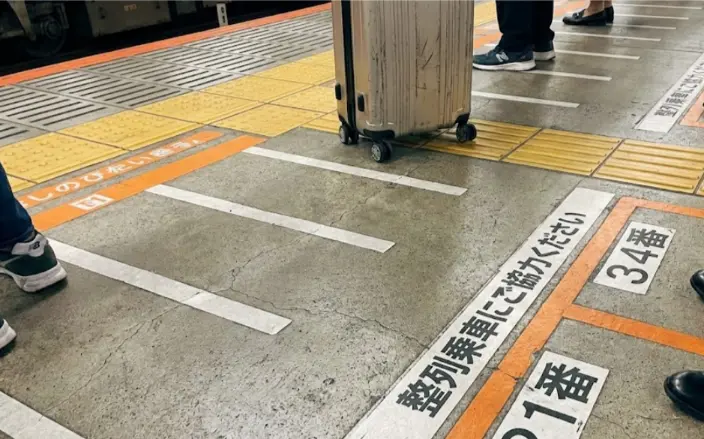
Visitors often describe Japan with familiar words:
Clean.
Orderly.
Efficient.
But there is another quality that is harder to name — yet deeply felt.
Japan feels predictable.
Trains arrive exactly when they are supposed to.
Lines form without instruction.
Crowds move smoothly without collision.
Even in large cities like Tokyo, there is a surprising sense of calm.
Why does this matter?
Because predictability is one of the most underrated forms of comfort.
Predictability Is Not Control
At first glance, this consistency might look like strict control or rigid rules.
But Japan’s predictability is not imposed from the top down.
It grows from the bottom up.
It is created by countless small adjustments made by individuals, every single day.
People lower their voices to match the room.
They stand to one side of the escalator.
They avoid blocking doorways.
They follow floor markings — even when no one is watching.
No one announces these behaviors loudly.
Most of them are not even formally written.
Yet because so many people follow them, the chaotic energy of the city softens.
Micro-Adjustments Create Fluidity
Each action is tiny.
A half-step to the side.
Waiting one second longer before boarding.
Glancing behind you before stopping suddenly.
Individually, these gestures seem insignificant.
Collectively, they transform the atmosphere.
When millions of people make these micro-adjustments daily, friction decreases.
Movement becomes fluid.
Noise stays low.
Conflict becomes rare.
The city feels smooth — almost effortless.
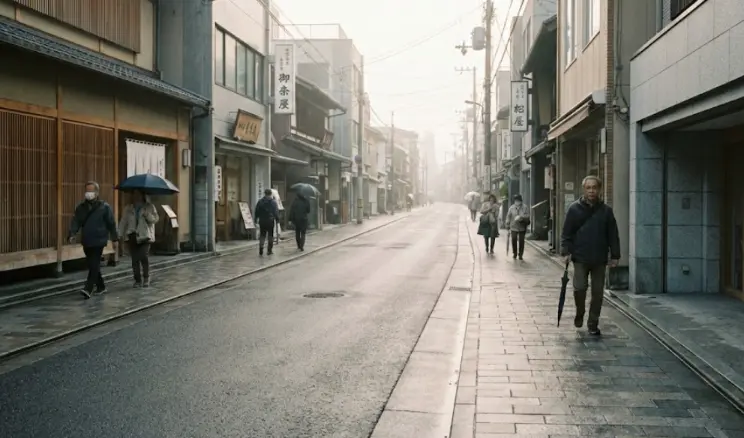
Why Your Brain Relaxes in Japan
This is where predictability becomes powerful for travelers.
Unpredictable environments are mentally exhausting.
In a chaotic city, your brain is constantly working in the background:
Will that car stop?
Will the train be late?
Will someone push past me?
Will the crowd suddenly surge?
This creates a constant cognitive load.
Your mind is always scanning for potential surprises.
In Japan, much of that mental strain is reduced.
You can trust that the train will arrive.
You can anticipate how the crowd will move.
You can assume others will follow shared norms.
The environment becomes readable.
And when your surroundings are readable, your brain relaxes.
That is why walking through Tokyo — or even crowded areas of Kanazawa — can feel surprisingly calm.
Trust as Infrastructure
At the core of this system is a shared expectation.
People assume:
Others will follow the norms.
Others will wait their turn.
Others will adjust slightly.
And because that expectation is widely shared, most people comply without needing enforcement.
Predictability is not about perfection.
It is about reducing surprise.
When surprise decreases, stability takes its place.
And when stability becomes normal, daily life begins to feel effortless.
In many parts of the world, unpredictability is simply accepted as reality.
In Japan, predictability is carefully maintained.
It may not look glamorous.
But it is one of the rarest luxuries in modern life —
A quiet comfort sustained by millions of small, everyday acts of consideration.