Kanazawa Experience
Why Don’t People Litter in Japan, Even When No One Is Watching?—“Not Being Seen” Means Something Different in Japan
Travelers to Japan almost always ask the same question.
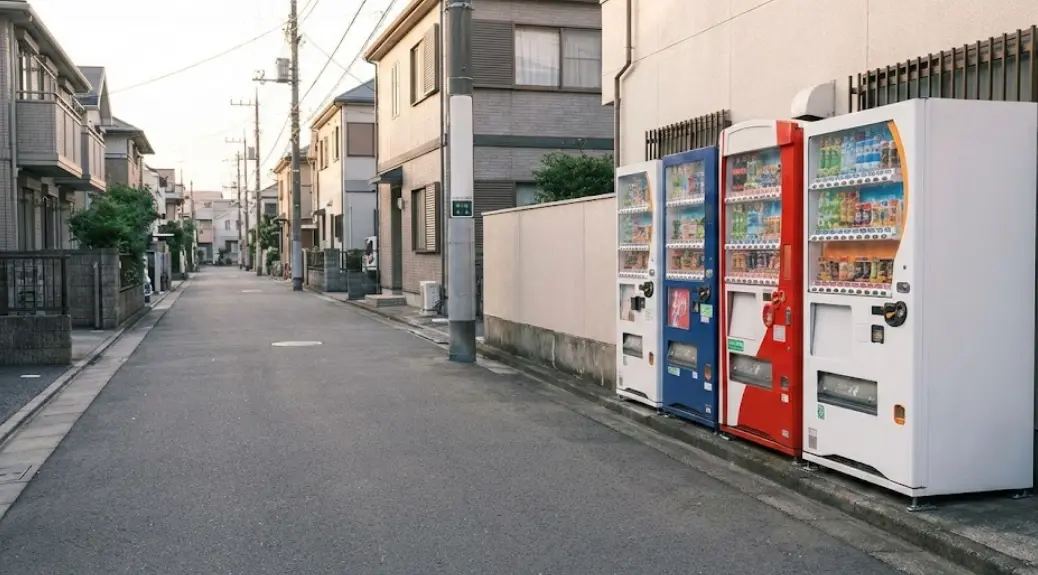
“There are hardly any trash bins—so why are the streets so clean?”
Then they add, genuinely puzzled:
“If no one is watching, wouldn’t it be okay to just drop it somewhere?”
Hidden inside this question is a fundamental difference in perception between Japan and many other countries.
In Japan, the idea of “no one is watching” is defined a little differently.
1. An Invisible Pressure That Works Before Punishment
In Japan, littering is rarely thought of first in terms of crime or fines.
Before laws or rules come to mind, another feeling kicks in:
“I’d be disturbing the place.”
“I’d be causing trouble for someone else.”
Japan is a high-density society where people constantly share space—
train stations, sidewalks, convenience store entrances, parks.
Most public spaces are places that someone else will use next.
So what happens if you drop trash there?
Someone might step on it.
Someone else will have to clean it up.
And the atmosphere of that place quietly worsens.
The cost of littering, then, isn’t a financial penalty.
It’s a social cost—disrupting harmony, creating friction with others.
The reason people don’t litter isn’t pure kindness.
It’s closer to a social instinct for living smoothly among others.
2. “Someone Else Will Clean It” Is Not the Default
Another crucial factor comes from childhood.
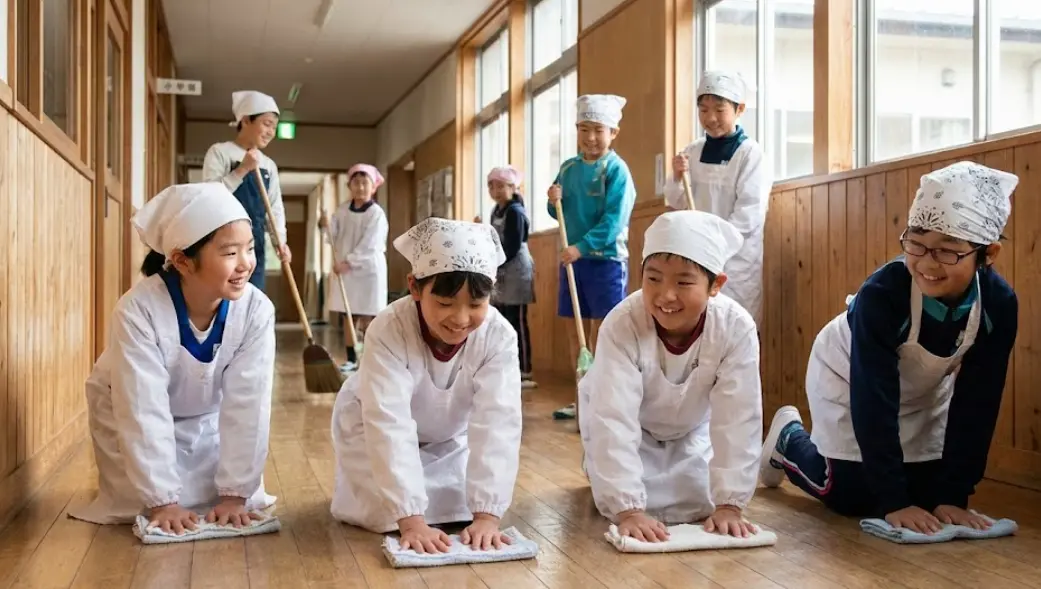
In Japanese schools, students clean their own classrooms, hallways, and toilets.
Professional cleaners are not the norm.
This isn’t just about labor.
What students learn is a simple principle:
Public spaces are maintained by the people who use them.
If you make a mess, you’ll have to clean it.
If your friend makes a mess, the work falls on your friend—or on you.
Through repeated experience, children absorb an unspoken assumption:
Public space isn’t something “managed by the government.”
It’s something supported by its users.
That assumption carries into adulthood, making “clean up what you use” feel natural rather than forced.
3. Cleanliness as a Way of Being, Not Just Practical Hygiene
There is also a deeper cultural layer.
In Japan, cleanliness has long gone beyond practical hygiene.
It has often been treated as a moral quality—a virtue.
Ideas such as “cleansing,” “keeping things in order,” or the saying “leave no mess behind” connect cleanliness to personal conduct, not efficiency.
As a result, littering doesn’t just feel inconvenient.
It feels wrong in a more visceral way.
People often describe it as:
-
“It feels unpleasant.”
-
“It doesn’t suit how I want to behave.”
The reaction is emotional, not analytical.
Conclusion: What’s “Seen” Even When No One Is There
When these three factors overlap, something interesting happens.
Even when no one is physically nearby, people still sense:
-
Someone who will use this place later
-
The shared atmosphere of the space
-
Their own internal standards
These invisible perspectives are always present.
That’s why people don’t litter.
Or more precisely, the option to litter often doesn’t even appear in the first place.
But this raises a new question.
“So where does the trash go, if you can’t throw it away outside?”
There are no bins.
You can’t just drop it.
Does the trash simply disappear?
In the next article, we’ll explore:
-
What actually happens to trash when there’s nowhere to throw it away
-
Why “taking it home” feels normal in Japan
And we’ll take a closer look at Japan’s unique relationship with waste—
one step deeper.