Kanazawa Experience
The Island Condition – How Geography Shaped Japanese Society
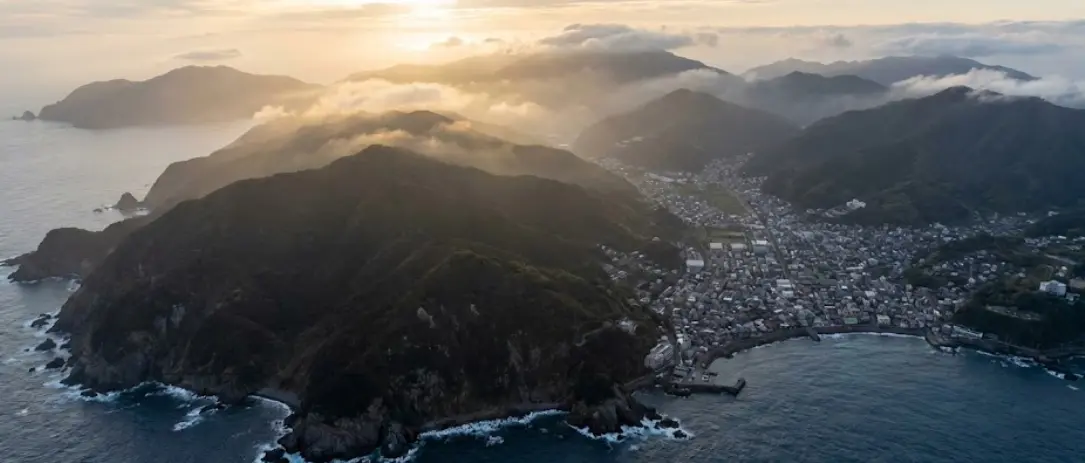
The Question Behind the Surface
Visitors often say the same things about Japan.
It is clean.
It is quiet.
It feels orderly.
It feels safe.
But these are not random traits.
They are not simply the result of strict laws or heavy policing.
To understand why Japan looks the way it does today, we need to look deeper — not at manners first, but at geography.
Japan’s social structure begins with its physical structure.
1. A Mountainous Island Nation
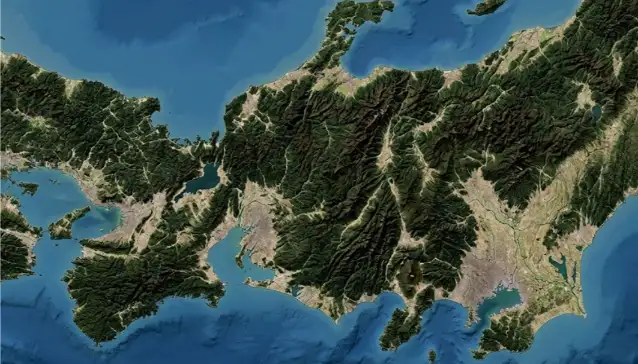
Japan is an island country made up of four main islands and thousands of smaller ones.
Roughly 70% of the land is mountainous.
Flat land is limited.
Livable space is concentrated.
At the same time, Japan has long supported a relatively large population.
This combination — limited space and high density — creates a particular social condition:
People cannot avoid each other.
Noise travels.
Disorder spreads.
Shared space must function smoothly.
In such an environment, mutual consideration becomes practical, not idealistic.
2. Living with Constraints
Because usable land is scarce, Japanese communities historically formed in tight clusters.
Villages, towns, and later cities developed with close proximity between households.
In dense societies:
-
Personal freedom is naturally negotiated.
-
Behavior affects others immediately.
-
Social friction becomes visible quickly.
Over time, systems that reduce friction survive.
Small daily habits — not blocking pathways, keeping shared areas clean, lowering one’s voice in public — are not abstract moral virtues.
They are adaptive behaviors.
3. Natural Disasters and Collective Discipline
Japan is also one of the world’s most disaster-prone countries.
Earthquakes, typhoons, volcanic activity, and tsunamis are recurring realities.
In disaster-prone environments, coordination is survival.
When evacuation is necessary, chaos can cost lives.
When rebuilding is required, cooperation accelerates recovery.
Over centuries, preparedness and social order became deeply embedded.
The ability to line up calmly, to follow instructions, to act collectively — these are not accidental traits.
They are responses to repeated environmental stress.
4. Isolation and Continuity
As an island nation, Japan experienced long periods of relative isolation.
Unlike continental societies constantly shaped by invasions and shifting borders, Japan’s political and cultural evolution was comparatively continuous.
This allowed internal systems to refine over centuries without being repeatedly dismantled.
Continuity strengthens norms.
When social expectations remain stable for generations, they become invisible — and powerful.
5. Geography Before Culture
It is tempting to say:
“Japanese people are naturally polite.”
But this explanation is too simple.
A more accurate perspective is this:
Japan developed social systems that reward harmony because harmony was structurally efficient.
Geography shaped settlement patterns.
Settlement patterns shaped cooperation.
Cooperation shaped expectations.
Expectations shaped behavior.
Cleanliness, quietness, and predictability are not personality traits of a nation.
They are the long-term outcome of adaptation to environment.
6. What This Means for Travelers
When you visit Japan today, you are not just experiencing a culture of manners.
You are experiencing a society designed by constraint.
Public transportation runs precisely.
Streets remain orderly.
Shared spaces feel secure.
Deviations stand out quickly.
The environment encourages predictability.
And predictability produces safety.
Japan’s order is not accidental.
It is structural.
Closing
This is only the beginning.
To understand Japan fully, we must also examine:
Agriculture and cooperation
Religion and the idea of purity
The long peace of the Edo period
Modernization and industrialization
War, defeat, and reconstruction
Geography set the stage.
History filled it.
Society continues to refine it.