Kanazawa Experience
Takayama Old Town – Sanmachi Suji, The Wooden Heart of Hida
1. About Sanmachi Suji
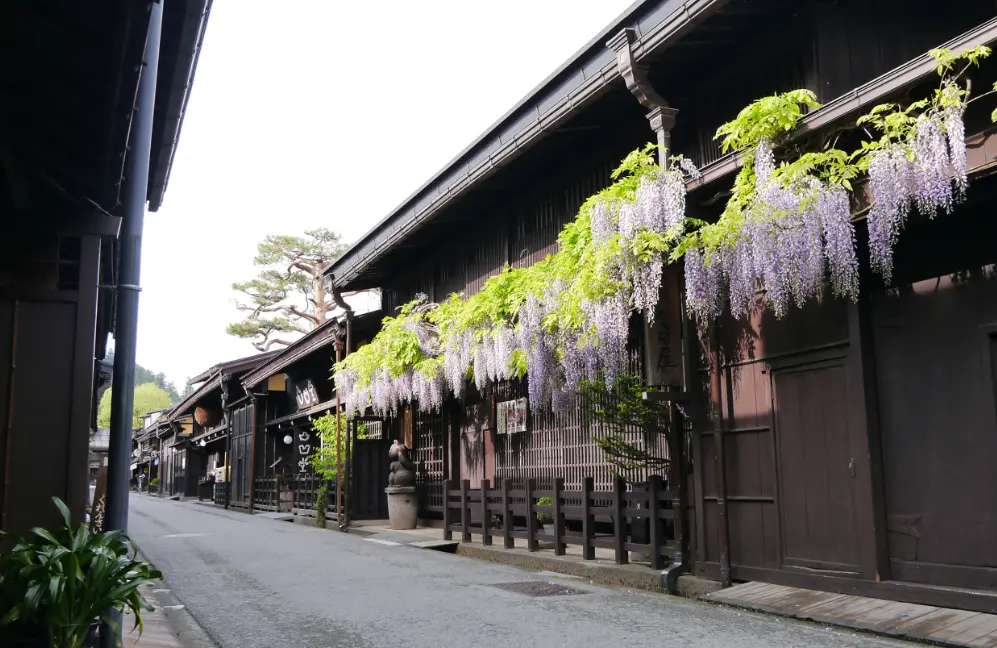
In the center of Takayama lies a compact district that captures the town’s soul in just a few narrow streets: Sanmachi Suji, the traditional merchant quarter.
Here, rows of deep, dark wooden townhouses line stone-edged streets. Sake breweries display large cedar balls over their doors, miso and soy sauce breweries release gentle aromas, and small craft shops glow softly behind latticework.
Sanmachi Suji is where most travelers fall in love with Takayama.
Unlike the wide, open fields and steep thatched roofs of Shirakawa-go, this district feels intimate and urban, yet still deeply connected to the mountains that surround it. The wood used to build these houses was drawn from those very forests, and the wealth of the town was built on timber, craftsmanship, and trade.
Walking through Sanmachi Suji, you experience:
the texture of old wood polished by time
the rhythm of small doorways and lattice windows
the scent of fermentation, roasted coffee, or traditional sweets
the sound of footsteps, bicycle bells, and low conversation
It is a place made to be explored on foot, slowly, with open senses.
For many visitors, this district alone justifies the journey to Takayama.
2. History & Townscape
Sanmachi Suji flourished during the Edo period, when Takayama became an important administrative and commercial center in the Hida region. While many Japanese towns modernized rapidly in the 20th century, Takayama preserved much of its wooden core, allowing the area to retain an atmosphere that feels remarkably authentic.
Merchant Town of the Mountains
Takayama’s merchants dealt in:
high-quality timber from the surrounding forests
traditional crafts such as lacquerware and woodworking
food products like miso, soy sauce, and sake
Because the town served as a regional hub, its streets were designed for commerce and storage rather than farming.
Houses in Sanmachi Suji are long and deep:
shops and display areas at the front
living spaces slightly behind
storage and workspaces further inside
small inner courtyards or gardens at the back
From the street, you see only the quiet, dignified facades — but behind them, lives and businesses once ran with careful efficiency.
Architectural Features
Typical features of Sanmachi Suji townhouses include:
dark wooden facades, often weathered but beautifully maintained
lattice windows (koshi) that filter light into the interior
noren curtains hanging over entrances
slightly overhanging eaves that protect the walkway from sun and rain
Sake breweries are easy to spot thanks to the sugidama — large green or brown cedar balls hanging outside.
The size and color of these spheres traditionally signaled the brewing season and the maturity of the sake.
Preservation Efforts
Takayama has taken significant steps to protect Sanmachi Suji from excessive modernization.
Regulations help maintain:
building height
facade materials
signage styles
As a result, even new businesses must adapt to the old streetscape, preserving the overall atmosphere while keeping the district alive and functioning.
3. Walking the District – Streets & Micro-Areas
Sanmachi Suji is often described as “three main streets,” but in practice the district feels like a small maze of side alleys, corners, and subtle variations in mood. Exploring these micro-areas is part of the charm.
The Main Axes
The core of the district consists of:
Ichinomachi
Ninomachi
Sannomachi
These streets run roughly north–south and are connected by smaller side lanes and cross streets.
Most visitors naturally gravitate toward Sannomachi, which is the most photogenic and active section.
Sannomachi – The Iconic View
Sannomachi Suji is the classic “postcard” view of Takayama:
continuous lines of dark wooden townhouses
hanging lanterns and tastefully restrained signs
small wooden bridges crossing drainage channels
people strolling, usually at a gentle pace
Here you’ll find:
traditional sweet shops
sake breweries
cafés inside old merchant houses
souvenir shops specializing in local crafts
Despite its popularity, the street still retains a calm dignity, especially in the early morning or late afternoon.
Side Alleys and Hidden Corners
One of the best ways to experience Sanmachi Suji is to step off the main route:
explore a narrow alley leading to a tiny shrine
follow a small backstreet toward a quiet residential area
notice where the stone pavement changes texture or height
These transitions reveal how the district connects to the rest of Takayama — not as a staged tourist zone, but as part of a living town.
Bridges and Cross Streets
Short side walks take you to:
small bridges over streams and drainage channels
slightly wider roads where old and new buildings mix
viewpoints where you can see the mountains framing the town
These spots are excellent for understanding the scale of Takayama: not overwhelmingly large, but dense with detail.
4. Food, Cafés, and Everyday Life in Sanmachi Suji
Sanmachi Suji is not only a historical area — it is also one of the best places in Takayama to eat, drink, and pause.
Traditional Tastes
Within and around the district, you’ll find:
shops selling miso and soy sauce, with barrels and displays hinting at long histories
sake breweries offering tastings, where visitors can try different varieties of local sake
sweet shops making mitarashi dango, senbei, and other classic snacks
Many of these businesses are run by families who have been in the trade for generations, adding to the sense of continuity between past and present.
Street Snacks & Light Bites
For travelers exploring on foot, Sanmachi Suji offers plenty of quick, enjoyable bites:
Hida beef skewers or small rice bowls from window stalls
warm croquettes for cooler days
soft serve or seasonal sweets during warmer seasons
These snacks are ideal for short breaks between walking and photography.
Cafés in Old Townhouses
A real delight of Sanmachi Suji is discovering cafés tucked inside traditional buildings:
some retain original beams, earthen walls, and wooden floors
others blend modern minimalist design with historical structures
Here you can:
rest with a cup of coffee or tea
enjoy a slice of cake or Japanese confectionery
simply sit and observe the flow of the street outside
These café moments often become quiet highlights of the day — a chance to slow down and absorb the atmosphere.
Everyday Life Behind the Facades
Although Sanmachi Suji is a popular tourist area, it remains connected to everyday life in Takayama:
shop owners chatting with neighbors
delivery vehicles weaving carefully through narrow streets
children on bicycles passing through on their way home
Remember that this is not a theme park; it is a functioning town district.
Respectful behavior — speaking softly, not blocking entrances, and handling goods gently — helps maintain the balance between tourism and local life.
5. Seasonal Scenery in Sanmachi Suji
One of the reasons Sanmachi Suji never feels repetitive is that the district changes character with the seasons.
Spring – Gentle Light and Early Blossoms
In spring, the air begins to soften and the light feels gentle.
Small blossoms appear near temples and along the river; some streets are decorated with seasonal ornaments.
The contrast between pale flowers and dark wood creates a subtle beauty — less dramatic than cherry-filled cities, but deeply atmospheric.
Summer – Deep Shadows and Cool Interiors
Summer brings warm temperatures and strong sunlight.
In Sanmachi Suji, this creates:
sharp contrasts between bright paths and deep shadows under eaves
cool interiors in wooden buildings where thick walls and shaded rooms offer relief
a lively, almost festival-like atmosphere as visitors move in and out of shops
The district feels energetic, but never overwhelming in scale.
Autumn – Warm Colors and Clear Air
Autumn is arguably the best season for photography in Sanmachi Suji:
sunlight takes on a warmer tone
nearby trees and hillsides turn shades of gold and red
air becomes clearer, sharpening details of wood grain and roof tiles
Many travelers remember the sound of their footsteps on the street and the feeling of crisp air as defining autumn memories.
Winter – Quiet Streets and Soft Snow
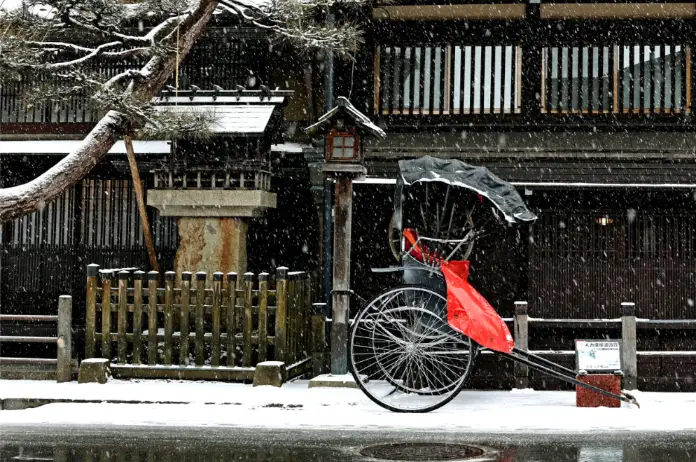
In winter, when snow falls, Sanmachi Suji transforms into a quiet world of white accents on dark roofs and wooden beams.
The streets may be wet or dusted with snow; lanterns and shop lights appear brighter against the grey sky.
Fewer visitors and muffled sound create a sense of intimacy, especially in the late afternoon.
6. Access & Best Time of Day
Sanmachi Suji is centrally located and easy to integrate into any Takayama itinerary.
From Takayama Station
about 10–15 minutes on foot
the route is straightforward: follow signs to the old town
Because the town is compact, walking is the simplest and most rewarding way to reach the district.
Recommended Time of Day
Morning: quieter, good for a calm stroll and photography
Midday: busier, ideal if you want lively atmosphere and open shops
Late afternoon: the most atmospheric; warm light and deep shadows
For many travelers, visiting twice in one day — once in the morning and once in the late afternoon — reveals different sides of the district.
Suggested Visit Duration
For a first visit, plan at least:
1.5–2 hours to walk, browse, and enjoy a café break
If you include:
sake tasting
craft shopping
a longer café stay
you may easily spend half a day without feeling rushed.
7. Traveler Tips & Etiquette
To keep Sanmachi Suji pleasant for everyone — visitors and locals alike — a few simple habits go a long way.
Walking & Photography
Keep to one side of the street when stopping to take photos.
Avoid standing in the center of narrow paths for long periods.
Be mindful of delivery vehicles and bicycles passing through.
Shop & Café Etiquette
Handle goods gently and avoid touching items unnecessarily.
Ask before taking close-up photos inside shops.
If you enter a café just to rest, consider ordering at least one drink per person.
Sound & Behavior
Speak at a moderate volume; sound carries easily in narrow streets.
Avoid playing music from phones or speakers.
Respect signs indicating private property or no entry.
Weather Preparedness
In summer, carry water and a hat.
In winter, wear shoes with traction; streets can be slippery.
A compact umbrella is useful year-round for sudden showers.
8. In Summary – Why Sanmachi Suji Belongs at the Top
Sanmachi Suji is more than just a preserved old street.
It is the wooden heart of Takayama, where history, daily life, and craftsmanship quietly blend into one continuous scene.
Here, travelers can:
feel the weight of centuries in each wooden beam
taste local flavors shaped by tradition
witness how a town can modernize without losing its character
walk at a human pace, noticing details with every step
As part of a larger journey — especially when combined with Shirakawa-go in the mountains — Sanmachi Suji offers a complementary experience:
not village fields and thatched roofs, but merchant houses, riverside breezes, and the subtle elegance of a historic town.
© 2024 Kanazawa Experience. Affiliate Links