Kanazawa Experience
Hida Folk Village – A Living Museum of Mountain Life & Architecture
1. About Hida Folk Village – A Quiet Journey Into Mountain Life
Hida Folk Village (飛騨の里) stands on a gentle hillside west of central Takayama.
It is an open-air museum that preserves traditional mountain architecture from across the Hida region, including thatched-roof farmhouses, workshops, storehouses, and rural shrines.
Unlike Shirakawa-go — where houses remain in their original village environment — Hida Folk Village gathers more than 30 historic buildings transported from various towns and mountain hamlets.
This allows visitors to walk through a complete, compact representation of rural life in the Japanese Alps.
The village atmosphere is peaceful and immersive:
wide gravel paths winding through maple and cedar trees
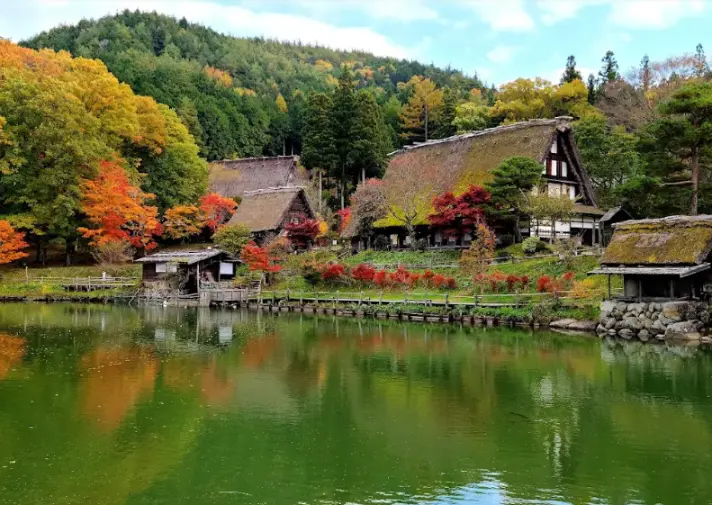
ponds reflecting thatched roofs
wooden houses naturally weathered by mountain air
farm tools arranged as they once were
quiet workshops demonstrating old techniques
Walking around Hida Folk Village feels like entering a time capsule.
Yet, the experience is not staged or artificial — the buildings are genuine homes and workspaces once used by real families, woodworkers, hunters, farmers, and craftsmen.
Visitors often say:
“Shirakawa-go is dramatic, but Hida Folk Village is peaceful.”
“Here I can actually feel how mountain people lived.”
The location is perfect for a relaxed half-day, offering space to breathe and reflect after exploring the busier old town areas.
2. History & Purpose – Why the Village Was Created
Preservation of Vanishing Architecture
During the mid-20th century, rapid modernization threatened traditional mountain buildings:
thatched roof houses were being replaced
rural families were moving to towns
wooden workshops were abandoned
old communal structures risked collapse
To preserve this disappearing heritage, the city of Takayama began collecting important buildings from remote settlements and rebuilding them carefully on this site.
Opened in 1971
Hida Folk Village officially opened in 1971, becoming one of Japan’s earliest large-scale open-air architectural museums.
The goal was not to create a theme park but a scholarly, accurate representation of mountain culture.
Protecting Cultural Assets
Many buildings here are registered cultural properties, including:
gassho-zukuri houses
woodworker’s houses
forest guard huts
grain storehouses
mountain shrines
Each building is kept as close to its original form as possible.
A Living Museum, Not Just a Display
Hida Folk Village is designed to feel alive:
seasonal decorations change
fires might be lit inside houses in winter
craft demonstrations occur regularly
tools and equipment are displayed in use
This “living environment” approach helps visitors visualize the rhythm of rural life.
3. Walking Through the Village – Architecture & Layout
The village is arranged around a central pond (“Goami Pond”) with houses positioned on gentle slopes, just as they would have been in remote mountain communities.
Entrance & Visitor Center
At the entrance, visitors can pick up a map outlining:
house names
construction dates
cultural significance
recommended walking route
Gassho-zukuri Farmhouses
Several steep-roofed gassho houses stand near the pond:
Characteristics include:
steep thatched roofs designed to shed heavy snow
wooden walls darkened by smoke
large attics used for sericulture (silk production)
hearths (“irori”) used for heat and cooking
These houses invite exploration across multiple floors.
Machiya-Style Townhouses
Some buildings come from Takayama’s urban districts, showing:
narrow facades
latticed windows
complex joinery
delicate interior partitions
They reveal the contrast between merchant life and rural homes.
Workshops & Storehouses
Each structure shows specialized skills:
woodworker huts with tools and benches
lacquerware workshops
mountain guard huts (yama-kaban)
granaries storing grain and seeds
These buildings highlight the wide range of skills essential to mountain life.
Interior Displays
Stepping inside reveals:
bundles of dried plants and herbs
farming equipment
loom machines and textiles
simple bedding
tools for winter survival
hand-carved furniture
The interiors are dimly lit by natural light, preserving an authentic mood.
4. Highlights & Experiences
1. Irori Hearth Demonstrations
During colder months, staff often light fires inside the hearths.
The smell of smoke and sound of crackling wood give an incredibly atmospheric experience.
2. Hands-on Cultural Workshops
Depending on the season, visitors can try:
carving wooden charms
painting sarubobo dolls
weaving straw items
traditional craft workshops for kids and adults
These activities connect travelers directly with Hida craftsmanship.
3. Seasonal Exhibits & Decorations
The village changes with traditions:
New Year decorations
winter hearth gatherings
spring doll displays
summer mountain rituals
autumn harvest arrangements
These decorations provide authentic cultural context.
4. Traditional Tools & Farming Life
Dozens of tools showcase the creativity of mountain people:
hunting traps
woodcutting instruments
snowshoes
rice-hulling machines
handcrafted sleds
silkworm raising equipment
Every object tells a story about survival and skill.
5. Scenic Photography Spots
The best vantage points include:
across the central pond
from elevated paths looking downward
beside thatched roofs with mountains behind
autumn maples reflecting in the water
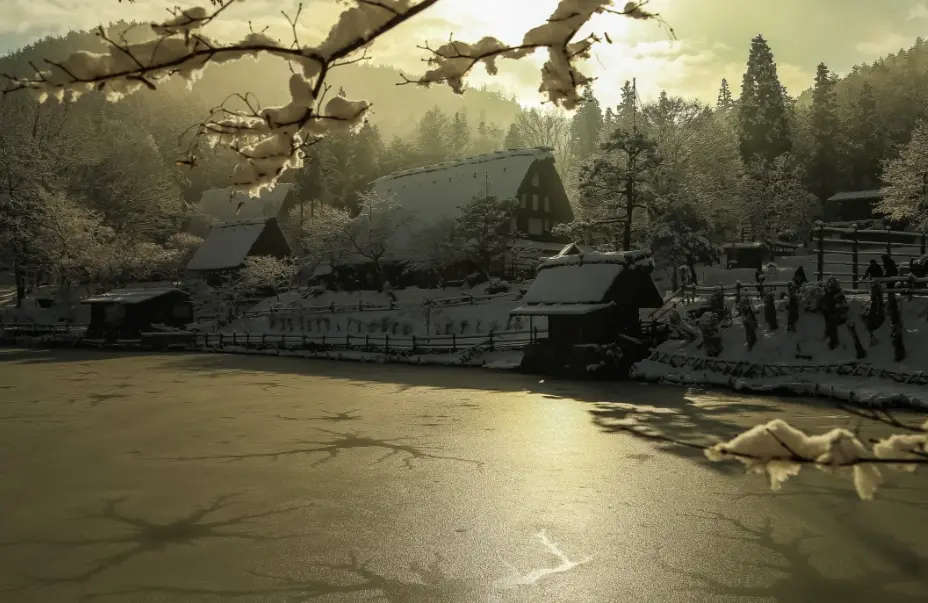
snowy roofs in winter
The variety of textures makes the village a dream location for photographers.
5. Seasonal Atmosphere of Hida Folk Village
Spring – Blossoms & New Light
plum and cherry blossoms near the pond
bright fresh green appearing across the hillside
gentle breezes moving through the houses
excellent weather for slow walking
The contrast between blossoms and dark wooden houses is stunning.
Summer – Deep Green & Mountain Shade
The village becomes lush and cool:
dense greenery around the pond
shade under tall cedars
small streams flowing softly
Even when Takayama town is warm, the hillside breeze provides relief.
Autumn – Peak Beauty of the Village
Fall transforms the village into a painting:
red and gold maples
thatched roofs glowing in the sunlight
crisp mountain air
peak photography conditions
Autumn is arguably the best season to visit.
Winter – Quiet, White, Atmospheric
Snow changes everything:
thick white layers on steep roofs
icy reflections on the pond
smoke drifting from hearths
footprints in the snow creating soft paths
Winter offers the most magical atmosphere — calm, silent, and deeply authentic.
6. Access, Route & Suggested Timing
From Takayama Station
10 minutes by bus (Sarubobo Bus, West Route)
about 30 minutes on foot (pleasant but uphill)
Suggested Visit Duration
Standard: 60–90 minutes
Slow photography walk: 2 hours
With workshops: 2–3 hours
Best Time of Day
Morning: soft light, very peaceful
Afternoon: warm sunlight on the pond
Late afternoon in winter: fire-lit interiors are beautiful
Suggested Walking Route
Enter near the visitor center
Walk clockwise around the pond
Explore gassho houses first
Move uphill to workshops
Circle down through machiya houses
Finish at the observation point above the pond
This route balances scenery, culture, and photo opportunities.
7. Traveler Tips & Etiquette
Some floors inside houses can be uneven — walk slowly.
Be mindful of low beams and narrow ladders.
No flash photography inside old buildings.
Houses can be cold in winter — dress warmly.
The paths may be slippery after rain or snow.
Respect roped-off areas; some houses are fragile.
Because this is a preservation site, thoughtful movement helps protect the architecture.
8. In Summary – Why Hida Folk Village Is #6
Hida Folk Village ranks sixth because it offers something that no other Takayama destination can:
a complete overview of mountain architecture
a walkable, peaceful environment
hands-on craft experiences
seasonal scenery that changes dramatically
quiet insight into real rural life
Sanmachi Suji shows elegance.
Miyagawa shows everyday rhythm.
Yatai Kaikan shows festival pride.
Sakurayama Hachiman shows spirituality.
Hida Folk Village shows the mountain lifestyle that shaped them all.
© 2024 Kanazawa Experience. Affiliate Links