Kanazawa Experience
Wada House – The Living Heart of Shirakawa-go
1. About Wada House
In the center of Shirakawa-go’s Ogimachi Village stands one of the most remarkable houses in all of Japan — the Wada House. With its towering thatched roof and elegant wooden frame, this grand farmhouse embodies everything that makes Shirakawa-go a World Heritage treasure.
Built more than 300 years ago, the Wada House is not only the largest surviving gassho-zukuri residence in the village, but also the most complete example of this unique architectural tradition. Unlike many preserved houses that exist purely as museums, the Wada House is still a living home, partly inhabited by the descendants of the Wada family, who have cared for it across generations.
From the moment you approach, the house commands respect. Its massive triangular roof rises nearly 18 meters high, sheltering multiple floors beneath a blanket of hand-tied pampas grass. The walls are built entirely from timber — no nails, no modern reinforcements — yet the structure has endured centuries of snow, storms, and time. Each beam and joint tells a story of craftsmanship, patience, and faith in the land.
Stepping inside, you immediately sense the atmosphere of another era. The scent of wood and smoke lingers in the air; the floorboards creak softly beneath your feet. Light filters gently through paper screens, illuminating tatami mats and low tables where families once gathered. Though the world outside has changed, the Wada House remains a living testament to how deeply architecture and lifestyle were intertwined in rural Japan.
2. History & the Wada Family Legacy
The story of the Wada House is inseparable from the story of Shirakawa-go itself. During the Edo period (1603–1868), the Wada family were among the most prominent and respected households in the region. They served as village headmen (nanushi) and official messengers for the feudal government, mediating between the remote mountain communities and the lords who ruled from afar. Their influence, combined with their wealth from trade and silk production, allowed them to build one of the most magnificent homes in the valley.
The original structure dates back to the early 19th century, though earlier generations of the family had already established their estate on the same site. Its design follows the gassho-zukuri tradition perfected through centuries of mountain living — steep thatched roofs to withstand heavy snow, wide attics for silk cultivation, and large open hearths to heat the home and preserve the thatch with smoke.
The Wadas were not only farmers and traders but also cultural leaders. They helped maintain the yui system — a communal tradition in which neighbors assisted one another in major tasks like re-thatching roofs or building new homes. This spirit of cooperation became the foundation of Shirakawa-go’s survival in its isolated mountain environment.
When modernization arrived in the 20th century, many traditional homes were lost as people moved away or replaced thatch with modern materials. But the Wada family remained committed to preserving their ancestral home. Through careful maintenance, roof re-thatching, and community collaboration, they kept the house alive while adapting to changing times. Their efforts played a key role in the preservation movement that led to Shirakawa-go’s designation as a UNESCO World Heritage Site in 1995.
Today, the Wada House stands as a symbol of both endurance and humility — proof that history can survive not by being sealed away, but by being lived.
3. Architecture & Craftsmanship
To truly appreciate the Wada House, look beyond its size and beauty — its genius lies in its design. Every detail reflects centuries of experience, local ingenuity, and a deep understanding of the harsh mountain environment.
The roof, rising at a sharp 60-degree angle, is constructed entirely from bundles of susuki (pampas grass), tightly woven and secured with rope. No nails or metal fasteners are used. Instead, an intricate network of interlocking wooden beams and joints supports the entire structure, allowing it to flex under the weight of snow or during strong winds. This natural elasticity has kept the house intact through earthquakes and extreme weather that would have destroyed less thoughtful designs.
The thatch itself serves as remarkable insulation. In winter, it traps heat inside; in summer, it allows air to circulate freely, keeping rooms cool and dry. Maintaining the roof is a monumental task — re-thatching requires the cooperation of dozens of villagers and can take an entire week. Even today, when the Wada roof is renewed every few decades, the event becomes a celebration of community spirit, echoing the ancient yui tradition.
Inside, the craftsmanship is equally astonishing. The vast wooden pillars, some thicker than a person’s waist, were cut from local cypress and assembled by hand. Each joint fits so precisely that the house can expand or contract with the seasons without cracking. Soot from the central hearth (irori) has darkened the beams to a rich black color over time, protecting them from insects and rot.
Beyond engineering, there’s a subtle artistry in every line and texture. The symmetry of the roof, the balance of the windows, the quiet harmony of wood and light — all reflect the aesthetic values of Japanese simplicity (wabi-sabi) and respect for nature. Standing beneath the high ceiling, you feel both the weight of history and the elegance of human adaptation.
4. Exploring the Interior
Entering the Wada House feels less like visiting a museum and more like stepping into a living memory. The interior remains largely as it was centuries ago — spacious, warm, and filled with quiet dignity. Visitors are encouraged to remove their shoes at the entrance, a small ritual that marks the transition from the outside world into the heart of a Japanese home.
On the ground floor, you’ll find the family’s living quarters. Tatami mats cover the rooms, divided by sliding shoji screens that can be opened to create larger spaces for gatherings. At the center lies the irori, a sunken hearth used for cooking, heating, and storytelling. The soft crackle of wood and faint scent of smoke create a comforting atmosphere that has sustained generations through long winters.
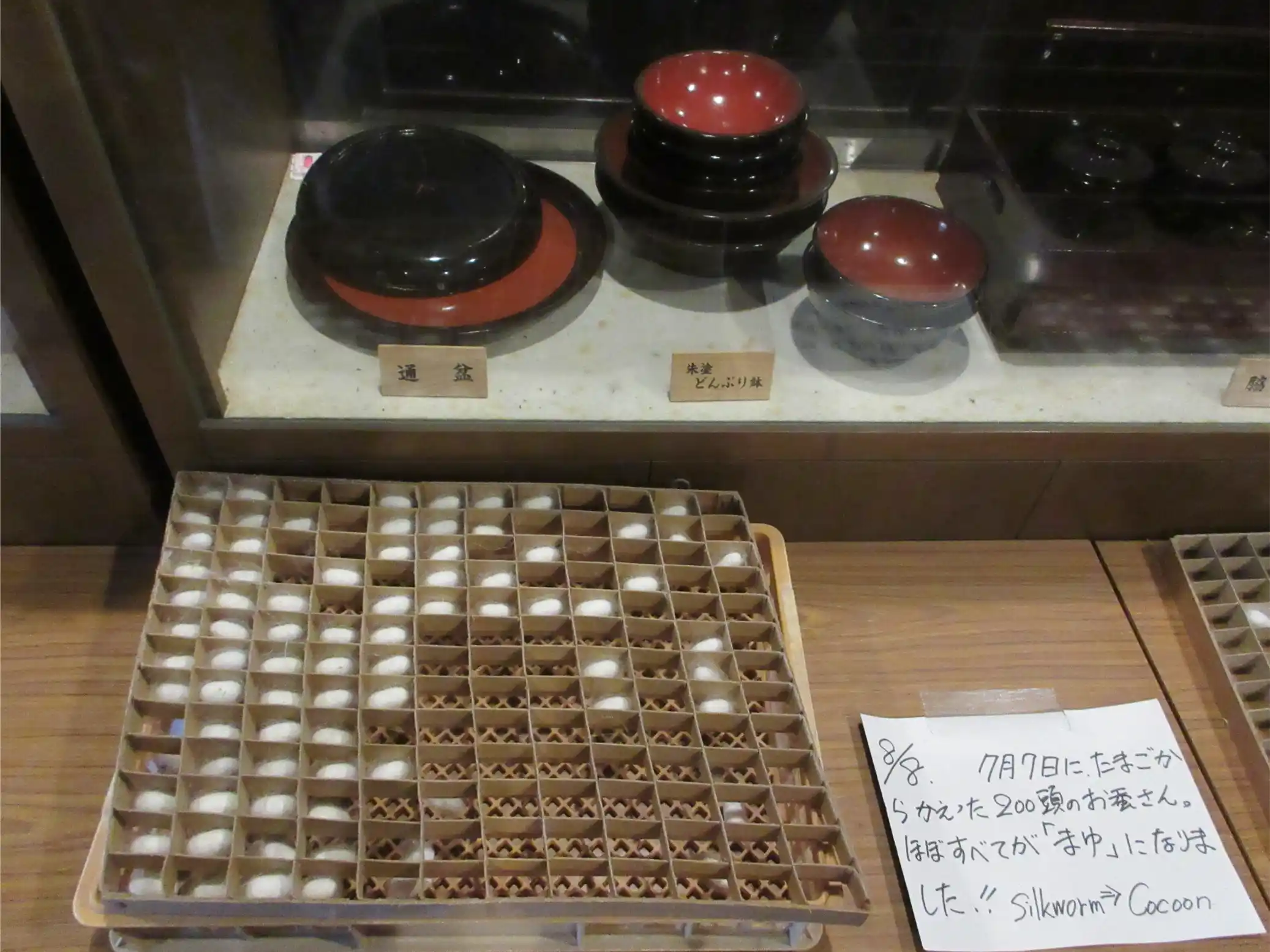
The second floor once served as the work area for silkworm cultivation. Bamboo racks and wooden trays still line the walls, giving visitors a glimpse of how silk was produced — a delicate process that required precise temperature control and constant care. The wide beams above your head reveal the scale and skill of the construction, and narrow ladders connect each level like veins in a living organism.
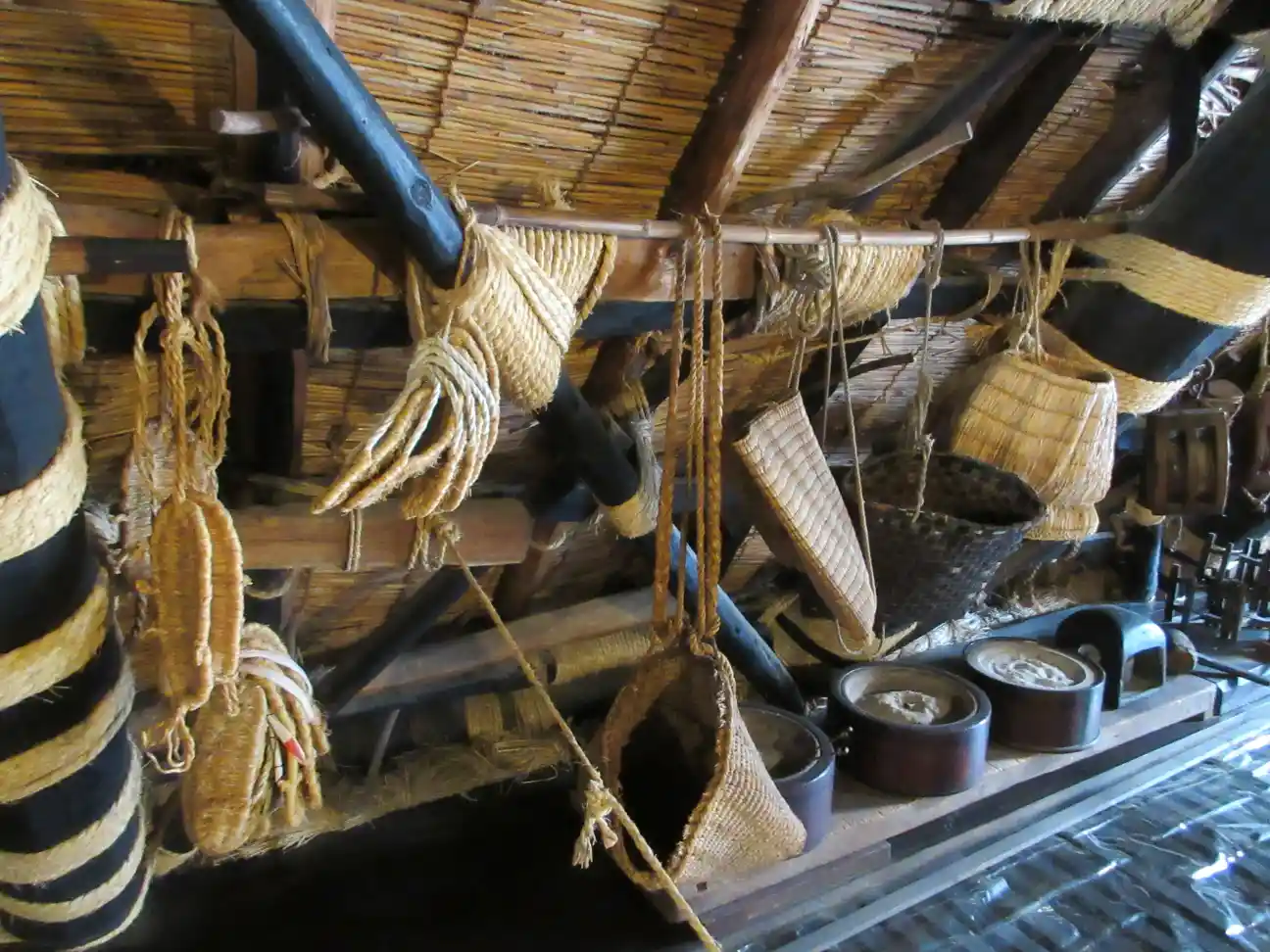
As you climb higher to the attic, you can see the hidden complexity of the structure — massive crossbeams tied together with straw rope, the soft filtered light through gaps in the thatch, and the sense of peaceful isolation that defined mountain life. From here, one can imagine the villagers working quietly in winter, surrounded by snow outside and the steady rhythm of silk cultivation within.
Small displays throughout the house showcase family heirlooms, farming tools, and historical documents. Yet nothing feels staged or artificial. The Wada House breathes authenticity; it tells its story not through explanations, but through the tangible presence of age, wood, and air.
5. Preservation & Community Spirit
The continued existence of the Wada House is not the result of luck — it’s the outcome of centuries of collective effort, respect, and shared identity. In Shirakawa-go, preservation is not merely about saving a building; it’s about sustaining a way of life that connects people to the land and to each other.
Every few decades, the thatched roof of the Wada House must be replaced. This massive task requires nearly a hundred volunteers from the village and beyond, working side by side in what is called a yui-no-kaya — a community roof-thatching event. Bundles of susuki grass are carried up ladders, layered precisely, and tied with rope. The work lasts days, but the atmosphere is festive: neighbors bring food, children run around, and laughter fills the air. In a single moment, you can witness the same cooperative spirit that kept these mountains alive for generations.
This yui system — a centuries-old code of mutual aid — is still the backbone of Shirakawa-go’s identity. It’s not charity, but reciprocity: when you help someone today, you can expect help tomorrow. Even in an age of convenience and digital connection, this face-to-face cooperation continues to bind the community together.
The Wada family, in particular, has played an active role in keeping this tradition alive. They have participated in preservation projects, guided scholars and filmmakers, and welcomed travelers to experience the real heart of gassho-zukuri living. Thanks to their commitment, the Wada House has become both a cultural landmark and a living classroom — a bridge between the old world and the new.
When UNESCO recognized Shirakawa-go in 1995, it wasn’t only the architecture that earned the honor. It was this very yui spirit — the idea that cultural heritage survives only when people care for it together. Standing inside the Wada House, you don’t just see history; you see continuity.
6. Access & Visiting Information
The Wada House is conveniently located near the heart of Ogimachi Village, only a short walk from the Deai Bridge and the main parking area. It’s one of the most accessible attractions in Shirakawa-go, and visiting it requires no special reservation.
Walking access: From the central village parking lot, it’s about a 5-minute walk through charming lanes lined with souvenir shops and cafés. Follow the signs marked “Wada-ke Jūtaku” (Wada Residence).
By car: If you’re visiting independently, park at the main lot across the river; private vehicles are restricted within the village itself.
By tour: Most private tours from Kanazawa or Takayama include a guided stop at the Wada House, often paired with the Ogimachi Village Viewpoint. Guides can provide historical context and translation for the exhibits inside.
Opening hours: 9:00 AM – 5:00 PM (last entry around 4:40 PM)
Admission: Adults 400 yen / Children 200 yen
Closed: Occasionally in winter for maintenance or roof work
Inside the entrance, friendly staff greet visitors, often members of the Wada family or local volunteers. Leaflets in English, Japanese, and Chinese provide background information. Photography is generally allowed, though flash should be avoided to protect the wood and paper materials.
The house interior can be a bit chilly in winter, as it relies on natural insulation rather than heating. In summer, the thick thatch keeps rooms surprisingly cool. A visit typically takes 30–40 minutes, though many travelers linger longer to enjoy the quiet atmosphere.
Nearby are small tea houses and local snack stalls — perfect for tasting gohei mochi (grilled rice skewers with sweet miso) or a cup of doburoku sake before continuing your exploration of the village.
(See also → Access from Kanazawa / Private Tours & Transfers)
7. Traveler Tips & Cultural Etiquette
The Wada House is both a cultural monument and a private residence, so visitors are encouraged to treat it with the same respect as a temple or home.
Here are a few thoughtful guidelines to ensure a meaningful visit:
Remove your shoes: Like all traditional Japanese homes, shoes must be taken off before stepping onto the tatami floors. Slippers are provided near the entrance.
Be mindful of others: Keep voices low, especially when groups are inside. The wooden floors echo easily.
Photography: Allowed, but no flash. Avoid touching beams, doors, or displays — many are original and fragile.
Respect private areas: Some rooms remain in use by the family and are clearly marked. Please do not cross those boundaries.
Clothing: The house can be cold in winter and humid in summer. Warm socks or breathable clothing help make your visit comfortable.
Timing: Morning visits tend to be quieter and provide beautiful soft light streaming through the windows. Late afternoon gives the interior a warm golden glow ideal for photography.
If you want to experience the atmosphere of life in a gassho-zukuri house, consider staying overnight at one of the thatched inns in the village. Though the Wada House itself does not offer accommodation, several nearby family-run lodgings provide an authentic experience — sleeping under thick beams, dining by the hearth, and waking to the sound of the river. Many travelers say this is the most memorable part of their trip.
Above all, approach the Wada House not as a tourist attraction but as a living heritage. Take your time, breathe in the scent of cedar and smoke, and imagine the generations that have passed through the same doorway. It’s a rare privilege to stand inside a home that still carries the heartbeat of centuries.
(See also → Tips & Manners / Staying Overnight)
8. In Summary
The Wada House is more than a historic building — it’s the embodiment of Shirakawa-go’s spirit. Within its walls, centuries of craftsmanship, resilience, and community come alive. The massive thatched roof shelters not only the family beneath it but also the memory of countless generations who built their lives in harmony with the mountains.
To visit the Wada House is to travel through time. You see how necessity created beauty, how tradition became strength, and how one family’s devotion helped preserve a world that might otherwise have vanished. The gentle light filtering through the paper windows, the smell of smoke rising from the hearth, the soft echo of your steps on wooden floors — every sensation connects you to a story larger than yourself.
In the end, what makes the Wada House extraordinary isn’t just its architecture, but its continuity. It’s a home that refuses to become a relic — still breathing, still welcoming, still teaching us about balance and gratitude.
As you step back outside and look at its towering roof against the backdrop of mountains, you understand why travelers from across the world are drawn here. The Wada House doesn’t merely show history — it lives it. And in doing so, it reminds us that the most enduring beauty is found not in perfection, but in perseverance.
© 2024 Kanazawa Experience. Affiliate Links