Kanazawa Experience
Ogimachi Village Viewpoint – The Iconic Panorama of Shirakawa-go
1. About Ogimachi Village Viewpoint
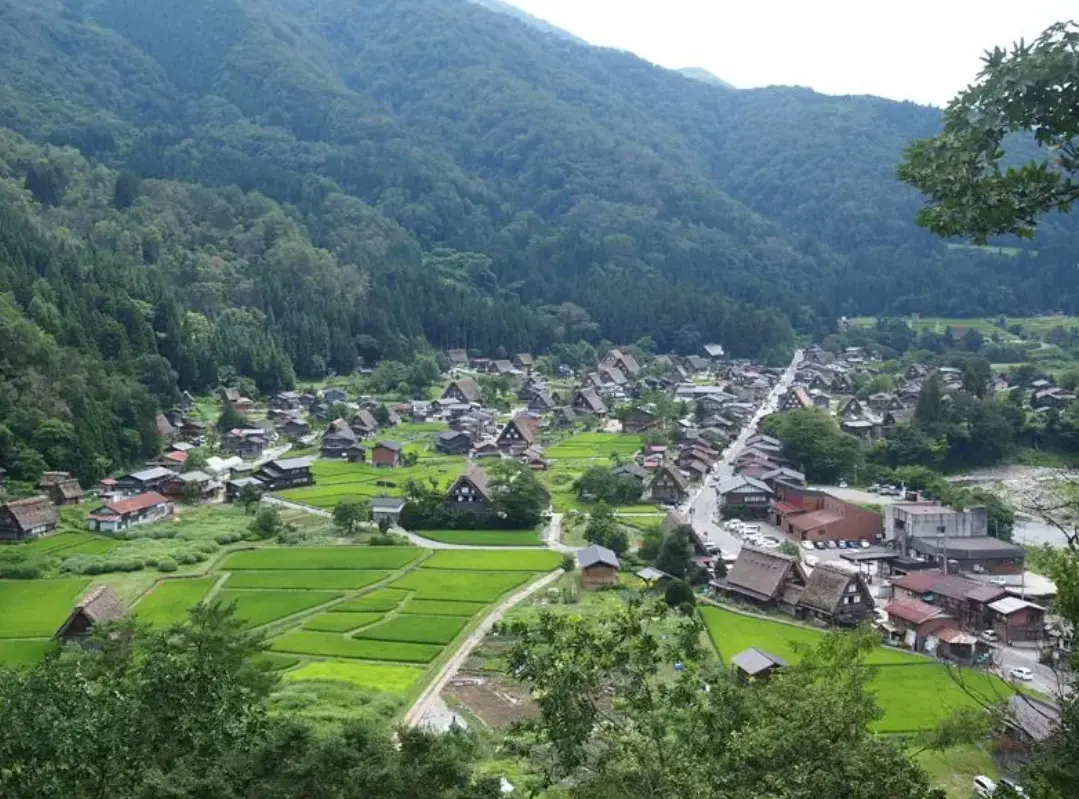
The Ogimachi Village Viewpoint offers the most breathtaking and comprehensive view of Shirakawa-go — a UNESCO World Heritage village nestled deep in the mountains of Gifu Prefecture. From this hilltop, travelers can overlook the entire valley: a mosaic of steep thatched roofs, winding rivers, and lush rice terraces that mirror the seasons like a living painting.
It is the spot where most visitors truly see Shirakawa-go for the first time. The village, encircled by dense forests and snow-capped peaks, unfolds below like a miniature world frozen in harmony. The thatched farmhouses, known as gassho-zukuri — literally “constructed like hands in prayer” — align gracefully with the curves of the land, each one facing the same direction to welcome sunlight and withstand the heavy snowfalls that define this region.
The scene from the viewpoint changes dramatically through the year. In summer, the valley glows with emerald rice fields and blue skies; in autumn, the slopes explode into fiery colors; in winter, a soft white silence covers everything. This timeless view, seemingly untouched by modernity, encapsulates the essence of rural Japan — quiet, resilient, and deeply connected to nature.
But the Ogimachi Viewpoint is more than a scenic overlook. It is a place where the story of Shirakawa-go can be understood rather than just observed — a window into how people have lived in harmony with their harsh environment for centuries.
2. History & Cultural Background
To appreciate the view, one must first understand the history behind it.
Shirakawa-go was once one of Japan’s most remote mountain regions. Heavy snow isolated its villages for nearly half the year, forcing residents to adapt their architecture, agriculture, and social structures for survival. Out of this isolation emerged the gassho-zukuri house — both a practical design and a spiritual expression of gratitude.
The gassho-zukuri homes are masterpieces of pre-industrial engineering. Their steep 60-degree thatched roofs, built entirely without nails, are supported by interlocking beams tied together with ropes made of hemp and straw. The design allows snow to slide off easily and air to circulate, preventing rot and keeping the interiors warm. The upper floors, large and airy, were once used for silkworm cultivation, which became the economic backbone of the valley.
Equally remarkable is how these houses were built — not by craftsmen for hire, but by the villagers themselves. Through a communal labor system known as yui, entire communities gathered to raise a roof in a single day. Neighbors brought food, laughter, and songs, turning labor into a festival of cooperation. This yui spirit formed the social DNA of Shirakawa-go: a belief that survival depends on mutual support.
During the Edo period, the Wada, Nagase, and other influential families managed trade and administration, linking Shirakawa-go to Takayama and Kanazawa. Despite isolation, the village prospered quietly, its culture blending Buddhist humility with mountain resilience.
By the 20th century, however, Japan’s modernization threatened to erase this way of life. Young villagers left for urban jobs, thatched houses were replaced with modern roofs, and the knowledge of roof-thatching began to vanish. Alarmed, locals and preservationists joined forces in the 1970s to protect what remained. Their success culminated in 1995, when Shirakawa-go and neighboring Gokayama were designated as UNESCO World Heritage Sites for their outstanding example of “a traditional human settlement harmoniously adapted to its environment.”
From the Ogimachi Viewpoint, that harmony is still visible — the same roofs, the same fields, and the same forests that generations before once tended with devotion.
3. A Living Village, Not a Museum
What makes Shirakawa-go unique among heritage sites is that it remains a living village. While many traditional areas in Japan have been converted into open-air museums, Ogimachi is still home to real families who wake, work, and sleep beneath those thatched roofs. Smoke rising from chimneys in winter isn’t for show — it’s daily life.
This living authenticity gives the village a soul. Walking its narrow lanes, you’ll see laundry drying under eaves, children walking to school, and locals greeting visitors with quiet smiles. Tourism has certainly transformed the economy — more than a million people visit every year — but the heart of the community still beats in rhythm with the mountains.
Preservation here isn’t about freezing time; it’s about balance. Villagers cooperate through local associations that manage roof maintenance, snow removal, and community festivals. When a roof needs to be replaced, the same yui tradition revives — dozens of neighbors gather to rethatch it in a single day, sharing food and sake as they work. The sound of laughter and teamwork echoes the same spirit that kept the village alive through centuries of isolation.
Tourism, though large in scale, is carefully managed. Power lines are buried underground, building regulations preserve the view, and lighting is strictly controlled to maintain the traditional landscape. Visitors are encouraged to explore respectfully — photography is welcomed, but entry into private homes is forbidden unless marked as open to the public.
The Ogimachi Viewpoint plays a symbolic role in this coexistence. It lets travelers witness the continuity between past and present — a community that adapts without surrendering its soul. The village isn’t staged for tourists; it’s simply being itself.
4. The Seasons of Ogimachi — Nature’s Four Masterpieces
Shirakawa-go is never the same twice. Each season transforms the valley into a new painting, and from the viewpoint, you can watch this slow theatre of time unfold.
Spring begins with snowmelt, when rivers swell and the air smells of cedar and earth. Cherry blossoms bloom along the Shirakawa River, and the first rice paddies shimmer with clear water. The roofs, newly repaired after winter, glint under fresh sunlight. Farmers in straw hats bend over the fields, their reflections dancing in the mirror-like water.
In summer, the valley becomes a lush world of green. The rice grows tall, and the scent of rain and grass fills the air. The thatched roofs turn golden in the heat, and cicadas buzz from the forest. The viewpoint offers a breathtaking panorama of life — shimmering fields, winding footpaths, and wooden houses that seem to float in a sea of green.
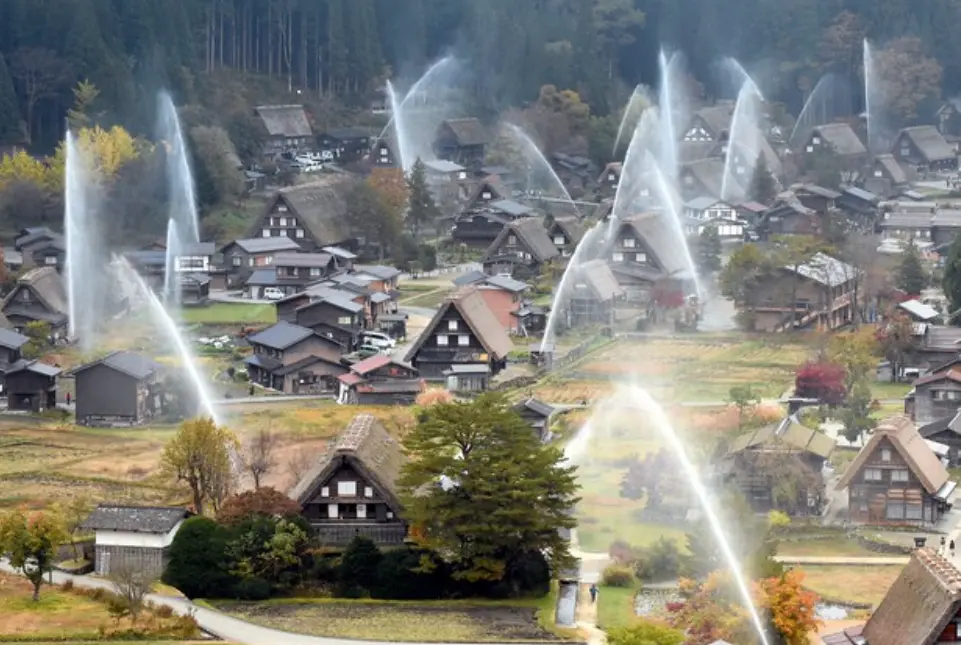
Autumn paints the mountains in gold, red, and amber. The entire valley glows at sunset, each roof framed by blazing maples. The harvest season fills the air with the smell of straw and smoke. Many photographers say this is when Shirakawa-go is at its most magical — a perfect blend of human order and nature’s wild beauty.
Then comes winter, the most iconic season. Snow blankets the village, softening every sound. The houses appear like lanterns of warmth beneath the white sky. During the famous Winter Illumination, lights glow under the eaves, casting golden halos on the snow. From the Ogimachi Viewpoint, this scene becomes otherworldly — a living postcard of peace and perseverance.
Whether you visit once or return in every season, the village always feels new. The air, the light, the rhythm — all shift with time, yet the sense of stillness remains eternal.
5. Access & Facilities
Despite being tucked away in a mountain valley, the Ogimachi Village Viewpoint is surprisingly easy to reach. The viewpoint sits on a gentle hill just north of the main Shirakawa-go village and can be accessed either on foot or by shuttle bus.
From the main parking area near the Deai Bridge, a clearly marked walking path leads up to the viewpoint in about 15–20 minutes. The trail is paved and well maintained, weaving through cedar trees and offering several small rest areas along the way. In warmer months, you can hear the hum of insects and the rustling of leaves, making the short hike as enjoyable as the view itself.
For those who prefer not to walk, a shuttle bus runs between the village and the viewpoint roughly every 15–20 minutes. The bus operates throughout the year, though schedules may vary depending on the season. During heavy snowfall, when the walking path is closed, the shuttle becomes the only safe option — it’s heated, comfortable, and drops passengers just a few meters from the observation deck.
If you arrive by car, there’s a small parking lot at the top, but it tends to fill quickly during peak hours, especially on weekends and holidays. From December to March, the access road may be closed due to snow, so it’s best to check local updates or ask your guide before driving up. Many private tours from Kanazawa or Takayama include the viewpoint in their itineraries, providing seamless transport and insights from English-speaking drivers.
At the viewpoint itself, you’ll find a spacious wooden observation deck with safety railings, benches, and vending machines. A small café nearby sells hot drinks and light snacks — a welcome stop in winter. Clean restrooms are also available near the bus stop. Even with its growing popularity, the site remains tidy and well-managed, thanks to the cooperative efforts of local volunteers and the tourism board.
(See also → Access from Kanazawa / Private Tours & Transfers)
6. Traveler Tips & Seasonal Advice
The Ogimachi Village Viewpoint is open year-round, but each season requires a different approach. To make the most of your visit, it helps to plan like a local.
Best time of day: The most dramatic photos are taken during the golden hour — early morning or late afternoon — when sunlight casts long shadows over the roofs. Morning visits offer soft, misty light; evenings reveal rich contrasts and, in winter, warm glows from household fires. Midday can be bright but less atmospheric.
Weather & clothing: In winter, temperatures can drop below –5°C (23°F). Dress warmly, with waterproof shoes or boots that can handle icy paths. The air is crisp, and snow often piles knee-deep, so gloves and a hat are essential. In summer, the opposite challenge awaits — humidity and strong sun — so bring a hat, sunscreen, and water.
Crowds: Shirakawa-go can get busy between 10:00 and 15:00, when most day-trippers arrive from Kanazawa or Takayama. If you prefer quiet, visit early morning before 9:00 or stay until evening when tour buses depart. The hours just before sunset are magical — and often surprisingly peaceful.
Photography etiquette: Tripods are welcome, but please avoid blocking pathways or setting up in crowded areas. Drones are strictly prohibited without prior authorization from the village office. During the Winter Illumination, photography spots may be assigned by staff to ensure everyone gets a chance to enjoy the view safely.
Respect for residents: Remember that Shirakawa-go is not a theme park — it’s a community. Many of the houses you see from the viewpoint are real homes. Keep noise levels low, don’t enter private property, and avoid shining flashlights toward the village at night. Small acts of courtesy go a long way in preserving the peaceful atmosphere that makes this place special.
Stay overnight if you can. Spending a night in one of the thatched-roof inns allows you to see Shirakawa-go at its quietest — mist rising at dawn, stars reflecting on snow at night, and the faint sound of water flowing beneath the bridges. The next morning, you can walk up to the viewpoint before the crowds arrive and experience a private moment with the valley.
(See also → Tips & Manners / Staying Overnight)
7. Explore More Around Shirakawa-go
Once you’ve admired the view from the Ogimachi Village Viewpoint, there’s much more to discover in and around the valley. The area surrounding the viewpoint is compact yet rich in culture, offering several attractions that complement the experience.
Wada House: The grandest and best-preserved gassho-zukuri farmhouse in Shirakawa-go. Still inhabited by descendants of the original family, it serves as both a living home and a museum. The massive wooden beams and centuries-old hearth transport visitors into the daily life of Edo-period villagers.
Myōzenji Temple: Known for its thatched main hall and tranquil garden, this temple showcases Buddhist influences in mountain architecture. Its small museum displays artifacts of rural faith and craftsmanship.
Heritage Museum: A cluster of relocated farmhouses presenting traditional tools, silkworm equipment, and educational exhibits about how the villagers lived. It’s an excellent stop for context before or after the viewpoint.
Deai Bridge: The suspension bridge linking the parking area with the village is a scenic photo stop in its own right, especially in autumn when leaves blaze red above the river.
Gokayama Villages: Located about 30 minutes away by car, these smaller and quieter villages share the same World Heritage designation and offer an even more intimate glimpse into mountain life.
For travelers who enjoy nature, several walking trails start from the village and climb into the surrounding hills, leading to lesser-known lookouts. In spring and summer, wildflowers line the paths; in winter, snowshoe tours offer a different perspective of the valley.
And of course, Shirakawa-go’s charm extends to its local cuisine. Try gohei mochi (sweet grilled rice skewers with miso sauce), hida beef croquettes, or doburoku — a cloudy homemade sake unique to the region. Many small cafés around the village serve local dishes with a view of the mountains.
(See also → Shirakawa-go & Gokayama Map)
8. In Summary
The Ogimachi Village Viewpoint is not just the best place to photograph Shirakawa-go — it’s where the spirit of the village reveals itself. From this quiet hilltop, you can witness centuries of harmony between humans and nature, preserved with care and lived with humility.
The view changes with every hour, every season, and every shift of light. Yet one thing never changes: the feeling of peace that settles over you as you gaze across the valley. The houses below, with their hands-folded roofs, seem to pray in silence — for the land, for the past, for the future.
Whether you come for a few hours or stay for a few days, the memory of this place will stay with you long after you leave. The wind through the cedar trees, the golden light on the roofs, the distant sound of a river — all of it becomes part of a story that continues to unfold.
The Ogimachi Village Viewpoint is, in every sense, the heart of Shirakawa-go: a meeting point between time and eternity, where beauty is not just seen but deeply felt.
© 2024 Kanazawa Experience. Affiliate Links