Kanazawa Experience
Michi-no-Eki Shirakawa-go – The Gateway to Japan’s Mountain Heritage
1. About Michi-no-Eki Shirakawa-go
Just moments after exiting the expressway and crossing into the quiet mountain valley of Shirakawa-go, travelers encounter a welcoming landmark: Michi-no-Eki Shirakawa-go, the region’s official roadside station. More than a simple rest stop, this facility serves as a true gateway to one of Japan’s most treasured cultural landscapes.
Situated only a few hundred meters from the Shirakawa-go IC and surrounded by forested hillsides, the station offers visitors their first glimpse of the rhythms of mountain life. The air is crisp, the river runs clear nearby, and the architecture — a modern interpretation of local style — blends naturally into the scenery.
Michi-no-Eki Shirakawa-go is an ideal place to pause before entering the historic village or before driving deeper toward Gokayama, Takayama, or Kanazawa. Here, travelers can stretch their legs, enjoy local snacks, browse regional crafts, gather information from the tourism desk, and take in a sense of place before continuing their journey.
For international visitors, this small roadside complex often forms their first connection to the values of Shirakawa-go: simplicity, craftsmanship, nature, and hospitality. And because it reflects the local culture without overwhelming crowds, it’s a calm introduction to the region’s spirit before stepping into the famous thatched-roof world of Ogimachi Village.
2. Role & History
Michi-no-Eki Shirakawa-go opened shortly after the completion of the Tokai-Hokuriku Expressway, a project that connected Japan’s central mountains more directly with major cities like Nagoya, Gifu, and Kanazawa. As traffic increased, so did the need for a place where travelers could safely rest, refuel, and gather accurate information before entering the fragile historic zone of Shirakawa-go.
From the beginning, the roadside station was designed not just as a convenience, but as a community hub promoting local products and traditions. It had a dual mission:
Support sustainable tourism by guiding visitors, easing congestion in the village center, and providing essential facilities.
Revitalize the region by offering a sales outlet for local crafts, foods, and agricultural goods.
For locals, it became a place where farmers could sell seasonal produce, artisans could display their work, and visitors could discover regional culture in an approachable way.
Its role has grown over time. Today, Michi-no-Eki Shirakawa-go serves as:
a logistical base for tour buses and self-driving travelers
a cultural presentation site that introduces the values of the World Heritage area
a meeting point connecting Shirakawa-go with Gokayama and the Hakusan mountain region
a wayfinding hub where visitors can access maps, weather advice, and cultural guidance
Though modern in function, the station preserves a spirit of mountain hospitality, offering comfort without disrupting the valley’s peaceful atmosphere.
3. Facilities Overview
Michi-no-Eki Shirakawa-go is compact but remarkably well-equipped, making it one of the most convenient and practical stops in the entire region. Its facilities are designed with both domestic drivers and international visitors in mind.
🅿️ Parking (Large & Efficient)
A spacious lot provides parking for:
regular cars
rental cars
motorcycles
large tour buses
During peak seasons — especially winter illumination events — the station helps disperse traffic to prevent congestion in the village itself.
ℹ️ Tourist Information Desk
Inside the main building is a friendly tourist information counter staffed by locals who can provide:
maps of Ogimachi Village
weather and road updates
shuttle bus information
safety guidance for winter conditions
recommendations for restaurants, shops, and walking routes
English materials are usually available, and staff often offer simple English assistance.
🍜 Restaurant & Food Corner
The on-site restaurant serves comforting regional dishes such as:
Sansai soba (noodles with mountain vegetables)
Hida beef croquettes
Gohei mochi (rice on a stick with sweet miso glaze)
Seasonal wild-vegetable tempura
This makes the station a perfect place to enjoy a light meal before exploring Shirakawa-go, especially for those arriving close to lunchtime.
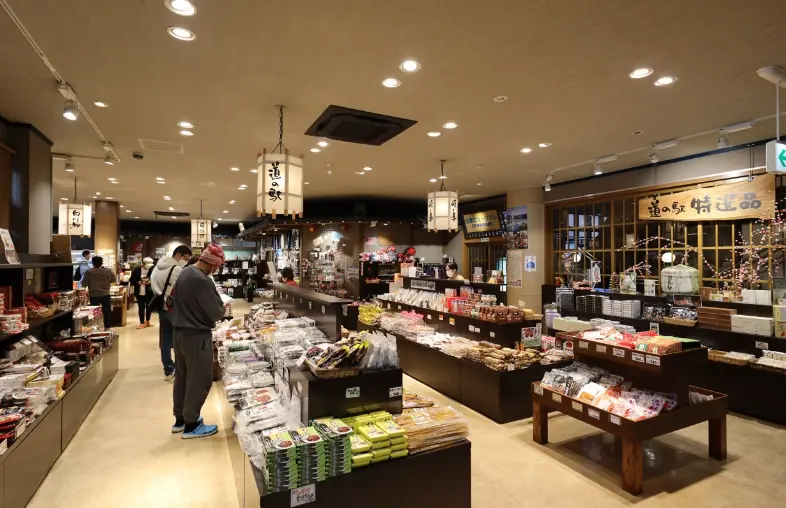
🛍️ Souvenir & Local Products Shop
The souvenir corner features a curated selection of local specialties, including:
Shirakawa-go doburoku sake
handmade washi paper goods
miso, pickles, and mountain herbs
wooden crafts and miniatures of gassho houses
locally produced snacks and sweets
Unlike the busy shops inside the village, the station’s selection is calmer and easier to browse — ideal for travelers who prefer a relaxed shopping experience.
🚻 Clean Restrooms & Facilities
Restrooms are modern, heated in winter, and well-maintained — a major relief for travelers driving through the mountains.
🌿 Outdoor Terrace & Small Walking Path
Behind the building, a small terrace and path offer views of:
the Shō River
surrounding forests
seasonal flowers
quiet resting spots
It’s not a major viewpoint, but it’s a peaceful space to breathe the mountain air before heading into the historic village.
❄️ Seasonal Notes
In winter, the station maintains heated indoor areas and snow-cleared pathways.
In summer, shaded benches provide a cool resting space under the surrounding trees.
Overall, the facility balances comfort, culture, and natural scenery — making it a perfect prelude to the main attraction.
4. Local Food & Souvenirs
One of the joys of stopping at Michi-no-Eki Shirakawa-go is discovering local flavors and crafts in a concentrated, easy-to-browse space.
The offerings here reflect the identity of the region — mountain agriculture, handmade traditions, and ingredients shaped by the climate.
🍢 Local Dishes & Snacks
The food corner highlights comforting regional favorites:
Hida beef croquettes – crispy on the outside, juicy inside, perfect for eating outdoors.
Gohei mochi – a warm, fragrant rice cake brushed with miso and walnuts.
Sansai udon or soba – noodles topped with wild vegetables gathered in spring.
Soft serve – seasonal flavors like vanilla, matcha, or local milk.
These dishes are ideal for travelers who need a quick, satisfying meal before heading into the village.
🍶 Local Drinks
Doburoku – the cloudy, full-bodied local sake famous in Shirakawa-go.
Gokayama and Hida-area craft sake – small bottles perfect as souvenirs.
Yuzu drinks and mountain herbal teas – refreshing during summer drives.
🎁 Souvenirs & Crafts
The shop offers a selection that’s high quality but not overwhelming — perfect for international visitors looking for meaningful gifts.
Highlights include:
Handmade washi paper stationery
Gassho-zukuri miniature models
Wooden toys and carvings
Local miso, sansai pickles, and chili pastes
Ceramic pieces from nearby pottery studios
Shirakawa-go branded snacks and sweets
Why the Souvenir Shop Matters
While many souvenir shops cluster inside the historic village, the station’s shop allows for a calmer, more thoughtful experience. Items here are curated with care, showcasing the region’s craftsmanship rather than mass-produced items.
It’s also an excellent option for travelers who:
don’t plan to spend long inside the village
want to avoid carrying many bags during sightseeing
need gifts before driving onward toward Takayama, Kanazawa, or Gokayama
The shop effectively acts as a cultural compact version of the region — a place where taste, touch, and tradition come together before the main journey begins.
5. Scenic Spots Around the Area
Though Michi-no-Eki Shirakawa-go primarily serves as a rest stop and cultural introduction point, its surroundings offer surprisingly rich scenery. Many travelers underestimate it, but the area around the station is a gentle microcosm of the valley’s natural beauty.
The Shō River
A short walk from the parking area brings you to the clear, fast-running Shō River, the lifeline of Shirakawa-go.
In spring, snowmelt turns the water bright turquoise.
In summer, the river glitters under high mountain light.
In autumn, red leaves float along the surface.
And in winter, the river runs dark and quiet beneath snow-covered banks.
The river’s sound becomes a soothing backdrop as you stroll or take photos.
Small Bridge & Riverside Path
Behind the station, a small pedestrian bridge crosses a tributary stream. It’s not heavily promoted, but locals often recommend it as a calming short walk before entering the historic village.
Wildflowers bloom in spring, dragonflies hover in summer, and the path becomes a peaceful snowy corridor in winter.
Seasonal Views
Although the station itself is modern, the surrounding scenery offers a taste of what’s ahead:
Spring: Cherry blossoms bloom around the parking area and fields.
Summer: Dense green mountains rise sharply, creating dramatic shadows at sunset.
Autumn: The foliage is spectacular — orange, gold, and red layers filling the entire valley.
Winter: Snow piles deep around the station, forming soft white walls and beautiful winter photo spots.
These landscapes allow travelers to feel the first touch of Shirakawa-go’s mountain identity even before reaching the thatched-roof village.
Photography Tip
Because the station sits slightly elevated above the river, the light is especially beautiful in the early morning.
Many drivers stop here briefly for pre-village sunrise photos before heading to the Ogimachi Viewpoint.
6. Access & Parking
One of the strongest advantages of Michi-no-Eki Shirakawa-go is its unmatched accessibility. It is strategically positioned for both domestic and international visitors, making it the ideal starting point for a day in the region.
🚗 By Car
From Kanazawa: approx. 1 hr 15 min
(via Hokuriku Expressway → Tokai-Hokuriku Expressway → Shirakawa-go IC)From Takayama: approx. 50 min
(via National Route 158 → 156)From Gokayama (Ainokura / Suganuma): approx. 30–40 min
From Toyama City: approx. 1 hr 20 min
The station is literally next to the Shirakawa-go IC, making it the first and most convenient stop after exiting the highway.
🚌 By Bus
Highway buses from Kanazawa, Takayama, Nagoya, and Toyama stop at Shirakawa-go Bus Terminal, which is separate from the station.
However, many travelers choose to walk or take a taxi from the bus terminal to the Michi-no-Eki before continuing their visit.
🚍 For Tour Groups
Tour buses often park or regroup here because:
the parking lot is large
restrooms are excellent
instructions can be given before entering the UNESCO zone
passengers can shop or stretch briefly
For tour operators, it’s the safest and most efficient staging point before entering the village.
🅿️ Parking Information
The station offers:
numerous standard parking spaces
large parking bays for buses
seasonal overflow areas during peak periods
snow-cleared sections in winter
Parking is generally smooth except during illumination events, when early arrival is recommended.
🚶♂️ Access to Ogimachi Village
Michi-no-Eki is not directly walkable to the main village unless you are comfortable with a long roadside walk.
Most travelers:
re-park at the official village parking area
take a shuttle bus
or continue by private car under village rules
Still, the station remains the smartest first stop, especially for information, breaks, and orientation.
(See also → Access from Kanazawa / White Road Loop)
7. Traveler Tips & When to Stop
Stopping at Michi-no-Eki Shirakawa-go can elevate your entire visit. It’s not simply functional — it genuinely enhances the travel experience.
Why Stop Before Entering Shirakawa-go?
You can gather maps and local insights before entering the UNESCO zone.
Restrooms and facilities here are far less crowded.
You can enjoy a snack to refuel before exploring the village.
You can check weather, road conditions, and seasonal changes, which matter deeply in winter.
It helps you mentally “shift gears” from highway driving to slow, mindful sightseeing.
Why Stop After Visiting Shirakawa-go?
A perfect place to buy souvenirs without crowds.
You can enjoy a relaxed late lunch or warm drink.
It provides a comfortable break before continuing toward Kanazawa, Gokayama, or Takayama.
Best Times to Visit
Morning (9:00–10:00): Quiet atmosphere, excellent light for photos.
Midday: Ideal for lunch and restroom breaks; moderate crowds.
Late Afternoon: Good timing for souvenir shopping and relaxing before departure.
Seasonal Tips
Winter:
Paths may be icy; walk carefully.
Heaters inside the building are a blessing.
Snowplows keep the entrance clear, but early morning snow can accumulate.
A warm bowl of sansai soba here is incredibly comforting.
Summer:
Shade and cold drinks available — a needed break in the humid mountain heat.
Autumn:
One of the best seasons; the hills behind the station form a glowing backdrop.
Spring:
Melting snow and cherry blossoms create perfect photo opportunities near the river.
Useful Practical Advice
Free Wi-Fi is available — helpful before entering areas with limited signal.
Trash bins are provided (rare in Japan), so dispose responsibly before entering the village.
If traveling by private car, this is an ideal place to adjust luggage, winter gear, or child seats before the sightseeing portion of your trip.
(See also → Tips & Manners / Staying Overnight)
8. In Summary
Michi-no-Eki Shirakawa-go is far more than a roadside convenience.
It is a small but essential gateway, offering travelers comfort, culture, and a gentle introduction to the values of the Shirakawa-go region.
Here, you get a preview of everything that makes the World Heritage villages remarkable:
the flavors of mountain cuisine
the craftsmanship of local artisans
the serenity of river and forest
the warmth of regional hospitality
Before the unforgettable thatched roofs of Ogimachi come into view, this is where your connection to the land quietly begins.
And as you depart the valley, the station becomes a place to reflect — a final breath of mountain air, a last glimpse of snow-capped peaks, a meaningful end to the journey.
In the flow of a day trip or a grand tour through Japan’s heartland,
Michi-no-Eki Shirakawa-go is not an extra stop — it is part of the story.
© 2024 Kanazawa Experience. Affiliate Links