Kanazawa Experience
Kanda House – A Hidden Gem of Shirakawa-go
1. About Kanda House
Nestled quietly among the thatched rooftops of Shirakawa-go’s Ogimachi Village stands the Kanda House — a graceful and perfectly preserved example of gassho-zukuri architecture. Though smaller than the nearby Wada House, the Kanda House is often considered the most elegantly designed of all, admired for its symmetry, craftsmanship, and subtle refinement.
Built in the late 19th century, it represents the final stage of development in the gassho-zukuri style — when centuries of mountain wisdom and carpentry reached their most sophisticated form. The house stands as a masterpiece of balance: sturdy yet graceful, rustic yet delicate.
What sets the Kanda House apart is not just its beauty but its atmosphere. Unlike many other preserved homes that feel distant or museum-like, the Kanda House maintains a warmth that draws visitors in. Inside, the scent of wood and the flicker of light from the open hearth recreate a world where family, work, and nature were one.
The Kanda family — who still manage the residence today — have preserved it with extraordinary care. They welcome visitors not only to observe but to experience what life once felt like in a mountain farmhouse: the echo of wooden floors, the glow of firelight, and the steady rhythm of snow falling outside.
For many travelers, visiting the Kanda House offers a quieter, more intimate understanding of Shirakawa-go — one that complements the grand scale of the Wada House and the panoramic splendor of the Ogimachi Viewpoint.
2. History & Family Background
The Kanda House was built around 1880 by descendants of the Kanda family, one of the prosperous merchant and farming households in Shirakawa-go. During the late Edo and early Meiji periods, the Kandas were deeply involved in silk production and trade, which flourished thanks to the region’s isolation and the unique climate that favored silkworm cultivation.
While other wealthy families in the village, such as the Wadas and Nagases, served as local officials or administrators, the Kandas became known for their craftsmanship and management of agricultural estates. Their home reflects not only financial success but also aesthetic sensibility — it was designed with precision, built to last, and adorned with subtle details that expressed both function and pride.
Constructing a gassho-zukuri house of this scale required years of preparation. Timber had to be cut from nearby cedar forests, dried naturally, and shaped by hand using traditional joinery techniques. The thatch was harvested from local pampas grass fields, bundled tightly, and layered in perfect alignment — a process that could only be completed through the cooperation of the entire community under the yui system of mutual labor.
The Kanda family’s reputation for generosity also grew alongside their craftsmanship. They contributed to local festivals, sponsored community works, and helped maintain the irrigation channels that still run through the village today. Even now, their descendants continue this legacy by opening the family home to visitors, ensuring that the house remains a living bridge between past and present.
3. Architecture & Design Features
The Kanda House is a study in elegant engineering. Measuring roughly 20 meters wide and 12 meters tall, it consists of four stories, each with a distinct purpose — from daily life on the first floor to silkworm cultivation in the attic. Its structural design demonstrates the peak of gassho-zukuri evolution, refined over centuries to balance strength, ventilation, and warmth.
The roof, with its sharply angled slopes, is made entirely of thick thatch — roughly 50 centimeters deep. It’s tied together with rope, not nails, allowing the house to “breathe” and flex naturally with changes in humidity or snowfall. The outer edges extend far beyond the walls, forming protective eaves that keep rain and snow from seeping in. This thoughtful design ensures that even during heavy winter storms, the inner walls stay dry and stable.
Inside, the Kanda House’s wooden framework reveals an intricate network of beams, pillars, and joints, each fitted with remarkable precision. Visitors often marvel at the sheer size of the timbers — some are as thick as a person’s torso — and the beauty of the exposed wood, polished over time by smoke and hands.
One of the architectural highlights is the irori (sunken hearth) located at the center of the main hall. It’s not only a place for warmth and cooking but also an architectural feature that helps preserve the building. The smoke from the irori rises through the open rafters, coating the beams in a layer of soot that naturally repels insects and prevents rot.
Another remarkable feature is the steep internal staircase connecting the floors. The climb to the attic offers a rare glimpse of how families lived and worked — narrow wooden ladders lead upward to vast open spaces once filled with silkworm trays. The careful use of vertical space reflects both practical ingenuity and aesthetic sensibility.
From the outside, the house’s symmetry and proportion catch the eye immediately. Unlike the more robust appearance of the Wada House, the Kanda House exudes refinement. Its precise geometry, clean lines, and balanced angles give it a calm, almost meditative beauty — as if it were designed to harmonize with the landscape rather than dominate it.
4. Inside the Kanda House
Stepping inside the Kanda House is like crossing a threshold between worlds. The sound of footsteps softens on the smooth wooden floor; a faint haze of smoke lingers in the air. The first impression is one of quiet — not silence, but the kind of stillness that carries the rhythm of everyday life from centuries past.
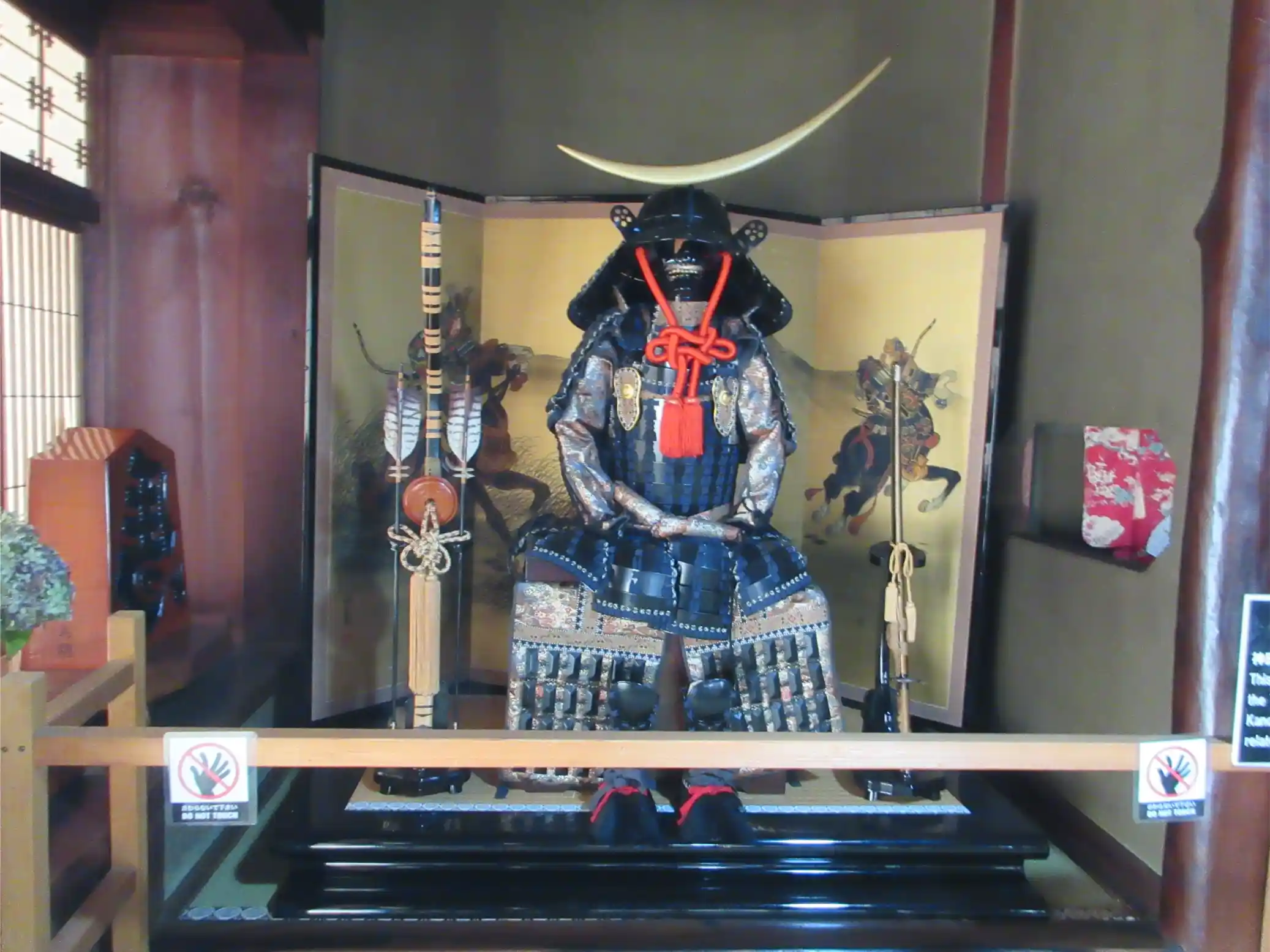
The ground floor once served as the family’s main living area. The irori hearth glows at the center, its hanging kettle suspended from an adjustable wooden hook called a jizaikagi. Around it, low tables and tatami mats create a warm communal space where family members gathered for meals and conversation. The walls display a few heirlooms — calligraphy scrolls, old photographs, and traditional tools — reminders of a household that valued both culture and craft.
Moving to the second and third floors, visitors can observe the structure’s ingenuity up close. Wooden ladders connect each level, revealing the building’s skeleton — enormous beams interlocked without nails, angled precisely to distribute the roof’s immense weight. Sunlight seeps through small windows, illuminating rows of bamboo trays that once held silkworm cocoons. In winter, this upper area would be warm from the rising heat of the hearth below; in summer, ventilation slits kept the air moving gently through the space.
The attic, accessible by a steep staircase, offers perhaps the most impressive view of the framework. From here, the craftsmanship feels almost cathedral-like — a web of beams arching gracefully toward the peak of the roof. It’s easy to imagine generations of villagers climbing these same steps to tend to their silkworms by lamplight as snow fell outside.
Today, the Kanda House’s interior is carefully preserved yet welcoming. The family encourages visitors to take their time, touch the handrails, feel the grain of the wood, and imagine the rhythm of life here. Unlike a typical museum, there’s no sense of distance; it’s as if the family has just stepped outside for a moment, leaving the fire glowing and the home quietly waiting.
5. Preservation & Local Life
The survival of the Kanda House is not simply the result of preservation efforts — it’s the continuation of a living tradition. In Shirakawa-go, heritage is sustained not by institutions but by the people who inhabit it. The Kanda family, together with the local community, have maintained their ancestral home through generations of craftsmanship, cooperation, and quiet pride.
Every few decades, the house undergoes its most dramatic renewal: re-thatching the roof. This enormous undertaking involves hundreds of bundles of susuki grass and the labor of dozens of volunteers. Known locally as kaya-okoshi, this process can last an entire week. From morning until sunset, villagers climb the roof to layer the grass by hand while others below prepare ropes, tools, and food.
It’s not a chore — it’s a festival of community spirit. Elderly residents recall the same scenes from their youth, while younger villagers learn techniques passed down for centuries. The Kanda family hosts the event with gratitude, serving hot meals to everyone who joins. When the work is finished, the new thatch gleams golden in the sunlight — a powerful symbol of both continuity and renewal.
This cooperative labor is part of Shirakawa-go’s enduring yui system, a tradition of mutual aid that extends far beyond construction. Whether clearing snow, maintaining irrigation channels, or celebrating harvest festivals, yui reminds everyone that individual survival depends on collective strength. The Kanda House remains at the center of this web of relationships — not just an artifact, but a participant in daily village life.
The family’s decision to open the house to the public reflects that same philosophy. Rather than sealing it off as a relic, they’ve chosen to share it as a living space, where visitors can witness the warmth of a real home. The smoke, the creak of the floor, the soft light on the beams — everything here invites reflection on what “home” means across cultures and generations.
6. Access & Visiting Information
The Kanda House is located in the northern section of Ogimachi Village, just a short walk from the main road that winds through Shirakawa-go. It’s easy to find, well-signposted, and accessible to travelers of all ages.
Walking access: From the main parking area near the Deai Bridge, cross into the village and walk about 7 minutes through narrow lanes lined with souvenir shops and traditional cafés. The route itself feels like a journey through history — thatched roofs above, stone walls below, and mountains all around.
Opening hours: 9:00 AM – 5:00 PM
Admission: Adults 400 yen / Children 200 yen
Closed: Occasionally during winter re-thatching or maintenance
By car or tour: Private vehicles are not permitted within the core of Ogimachi Village, but the central parking lot (just across the river) offers ample space. Many private car tours from Kanazawa or Takayama include the Kanda House as one of their featured stops, along with the Wada House and Ogimachi Viewpoint.
Once inside, you’ll be greeted by friendly staff — often local residents or members of the Kanda family themselves. They provide English-language pamphlets and are happy to answer questions about the architecture or family history. Visitors are welcome to explore all open floors, take photos (without flash), and rest by the hearth for a moment of quiet.
The house interior is unheated in winter, so dress warmly, especially if you plan to linger upstairs. In summer, the thick thatch keeps the air pleasantly cool. The contrast between the seasons is part of the experience — you begin to understand how architecture itself becomes a form of adaptation.
Nearby, you’ll find several inviting cafés serving gohei mochi (sweet grilled rice skewers), sansai soba (wild mountain vegetable noodles), and hot green tea. From there, it’s only a short walk to other landmarks such as the Wada House, Myōzenji Temple, or the trail to the Ogimachi Viewpoint.
(See also → Access from Kanazawa / Private Tours & Transfers)
7. Traveler Tips & Cultural Etiquette
A visit to the Kanda House is an opportunity to step into living history — but also a moment to practice mindfulness and respect. These simple tips will help make your visit meaningful for both you and the residents who maintain this heritage.
Remove your shoes: Before stepping onto the tatami mats, please take off your shoes. Indoor slippers are provided near the entrance.
Quiet appreciation: The house is built of old wood that carries sound easily. Soft voices preserve the calm atmosphere that defines the experience.
No flash photography: You are free to photograph, but flash can damage the surfaces of old paper and wood. Natural light here is more beautiful anyway.
Do not touch the beams or tools: Many of the items displayed are original artifacts used by generations of the Kanda family.
Mind the stairs: The ladders and staircases are steep — hold the railings carefully, especially when descending from the attic.
Respect private areas: Some rooms remain off-limits as the family still uses them. Signs will clearly mark these sections.
When to visit:
If possible, aim for early morning or late afternoon. Morning light filtering through the paper screens creates a soft, spiritual glow. Late in the day, golden light warms the wood and fills the house with a nostalgic radiance.
Seasonal notes:
In winter, the thick thatch may be covered in snow, creating a magical contrast against the dark wood. Paths can be slippery — wear boots with good grip.
In summer, bring a small towel or fan; the humid mountain air can be intense in the afternoons.
In autumn, the view of the surrounding mountains from the entrance is stunning — a perfect time for photographers.
Above all, take your time. The Kanda House is not meant to be “seen” quickly but felt slowly. Sit by the hearth for a few minutes, listen to the creak of the beams, and imagine the quiet rhythm of life here a hundred years ago. It’s one of those rare places where you can feel the presence of time itself.
(See also → Tips & Manners / Staying Overnight)
8. In Summary
The Kanda House is a smaller, quieter, and more introspective counterpart to the grand Wada House — yet for many travelers, it leaves an even deeper impression. It’s a place where simplicity reveals sophistication, where structure becomes story, and where the everyday life of a mountain family transforms into something timeless.
Every beam, rope, and straw bundle speaks of devotion — not only to craft but to community. The house is an essay in patience: built to last centuries, maintained with love, and shared generously with the world. Through it, the Kanda family continues a dialogue that began generations ago — between people and nature, between endurance and beauty.
Standing in front of the Kanda House as the afternoon light touches its thatched roof, you realize it embodies the very essence of Shirakawa-go: quiet strength, harmony, and gratitude. It’s not just a preserved home; it’s a living philosophy, one that teaches us that preservation is not about holding the past still, but about allowing it to breathe.
In the end, the Kanda House reminds every visitor that heritage is not something we look at — it’s something we share.
© 2024 Kanazawa Experience. Affiliate Links