Kanazawa Experience
History and Cultural Heritage of Shirakawa-go: Living Traditions in the Mountains of Japan
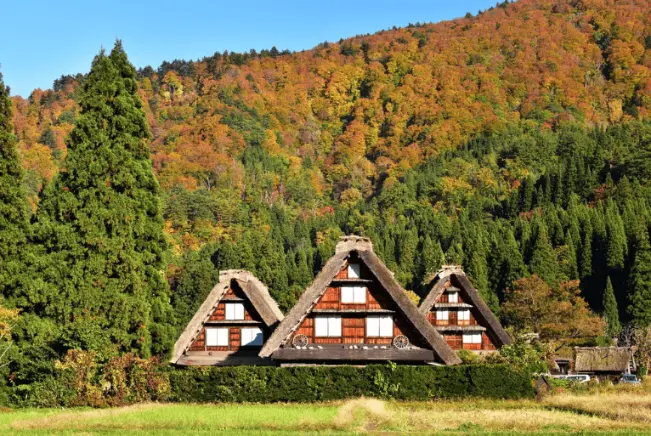
1. Introduction: A Village Shaped by Time and Nature
Deep in the mountains of central Japan lies Shirakawa-go, a timeless village where people have lived in harmony with nature for centuries.
Surrounded by forests and rivers, this UNESCO World Heritage Site is best known for its Gassho-zukuri houses — steep, thatched-roof farmhouses built to withstand heavy winter snow.
Life here has always been shaped by the rhythm of the seasons.
The people of Shirakawa-go adapted to the challenges of mountain living through cooperation, craftsmanship, and a deep respect for their environment.
Even today, the village stands as a living example of sustainable coexistence between humans and nature.
2. Origins of the Gassho-zukuri Villages
The distinctive Gassho-zukuri architecture — meaning “constructed like hands in prayer” — emerged during the Edo period (17th–19th centuries).
The design reflects both religious symbolism and practical engineering.
The steeply pitched roofs, made entirely from straw, allow heavy snow to slide off easily, while the large attic spaces were once used for sericulture (silk farming).
Every beam and joint was crafted without nails, relying instead on wooden pegs and ropes, demonstrating remarkable traditional carpentry.
Each house was built by the hands of the community — friends, relatives, and neighbors coming together in a system of “Yui” (mutual cooperation).
This spirit of unity continues to define Shirakawa-go today, where many of the same houses are still family-owned and lovingly maintained.
3. Life in the Old Days: Community and Cooperation
For generations, life in Shirakawa-go revolved around agriculture, forestry, and silk farming.
Isolated by snow for months each winter, villagers relied heavily on cooperation to survive.
The community’s social system, called Yui, was built on mutual aid.
Villagers worked together to build homes, repair roofs, share harvests, and clear snow.
This spirit of teamwork extended beyond labor — it was a philosophy of life that valued balance, humility, and interdependence.
Daily routines followed the natural rhythm of the seasons:
Spring brought rice planting and roof repairs.
Summer focused on silkworm cultivation and festivals.
Autumn was the season for harvest and preservation.
Winter meant reflection, storytelling, and crafting by the hearth.
Even in modern times, visitors can still feel this warmth of community — not as a display for tourists, but as a living tradition quietly carried forward.
4. Faith and Festivals of Shirakawa-go
The people of Shirakawa-go have long worshipped Mount Hakusan, one of Japan’s most sacred peaks, as the source of life-giving water and protection.
This ancient Hakusan faith connects Shirakawa-go spiritually to the wider region, including neighboring Hakusan City.
Shrines such as Shirakawa Hachiman Shrine stand at the heart of village life.
Here, the famous Doburoku Festival — held each October — celebrates the mountain deities with sacred sake, traditional dances, and music performed by locals.
Other festivals mark the changing of seasons, honoring nature’s cycles and giving thanks for good harvests.
These events are not merely for entertainment; they express a worldview where humans, gods, and the natural world exist in continuous harmony.
In Shirakawa-go, faith is not confined to temples or rituals — it is found in daily acts of gratitude: tending the fields, repairing roofs, or lighting a small altar inside the home.
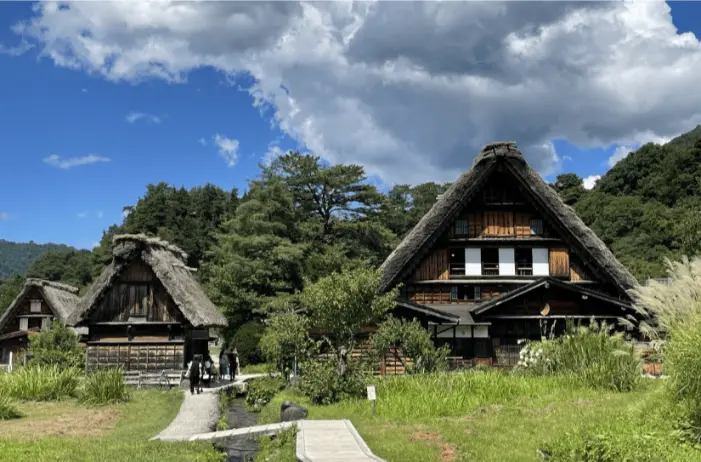
5. Preservation Efforts and UNESCO World Heritage Recognition
By the mid-20th century, modernization and depopulation threatened the survival of Shirakawa-go’s unique architecture and way of life.
Many young residents moved to cities, and traditional thatched houses were being replaced with modern buildings.
Recognizing the cultural and historical value of the village, the local community began working together to protect their heritage.
They formed preservation societies, restored old houses using traditional methods, and promoted awareness of the importance of keeping the village alive — not as a museum, but as a living settlement.
In 1995, Shirakawa-go, together with Gokayama (in Toyama Prefecture), was inscribed as a UNESCO World Heritage Site for its exceptional example of a traditional human settlement perfectly adapted to its environment.
Today, preservation is carried out not only by experts but also by residents themselves — maintaining roofs, managing forests, and passing down craftsmanship through generations.
This balance between living tradition and cultural protection makes Shirakawa-go one of the most inspiring rural communities in Japan.
6. Architecture and Design Details
Each Gassho-zukuri house in Shirakawa-go is a masterpiece of functional beauty.
Built entirely from natural materials — wood, rope, straw, and earth — these homes are perfectly designed for the harsh mountain climate.
Key features include:
Steep thatched roofs: angled at about 60 degrees, allowing snow to fall off easily.
Open attics: once used for raising silkworms and drying crops.
Flexible wooden frames: built without nails, allowing the structure to “breathe” and move slightly during heavy snow or earthquakes.
Orientation: houses face north–south to maximize sunlight and reduce wind damage.
The construction of one roof requires up to thousands of bundles of straw, and rethatching takes place every few decades through collective effort — another example of the enduring Yui spirit.
Beyond their practicality, these houses embody a philosophy:
that architecture should serve not only human comfort, but also the harmony of the environment and community.
7. Modern Life in a Living Village
Unlike many heritage sites, Shirakawa-go remains a living village — people still reside in the same homes their ancestors built.
Farming continues, children go to school, and life unfolds quietly beneath the mountains.
At the same time, the village now welcomes visitors from around the world.
Tourism provides essential income, but it also brings challenges such as traffic, noise, and maintaining privacy for residents.
To preserve the village’s character, the community has established strict guidelines for construction, signage, and environmental management.
Many families also operate guesthouses (minshuku), inviting travelers to experience life in a traditional home — sleeping on tatami, eating local dishes, and watching snow fall outside the paper screens.
This coexistence of old and new is delicate, but it shows how Shirakawa-go continues to evolve without losing its soul.
It remains not a relic of the past, but a living symbol of balance, patience, and pride.
8. Why Shirakawa-go Matters Today
In a rapidly changing world, Shirakawa-go reminds us that progress and preservation can coexist.
Its people have shown that true sustainability is not only about technology, but about respect — for nature, for community, and for time.
The lessons of this mountain village extend far beyond Japan:
how to live with the seasons, how to value cooperation over competition, and how to find beauty in simplicity.
For visitors, walking through Shirakawa-go is more than sightseeing — it’s a moment of reflection.
Every snow-covered roof, every quiet path, and every smile from a local resident speaks of resilience and gratitude.
Shirakawa-go endures not because it resists change, but because it embraces it with wisdom.
It is, quite simply, a living heritage — where the past and the present breathe together.
© 2024 Kanazawa Experience. Affiliate Links