Kanazawa Experience
Gokayama – The Quiet Twin of Shirakawa-go
1. About Gokayama
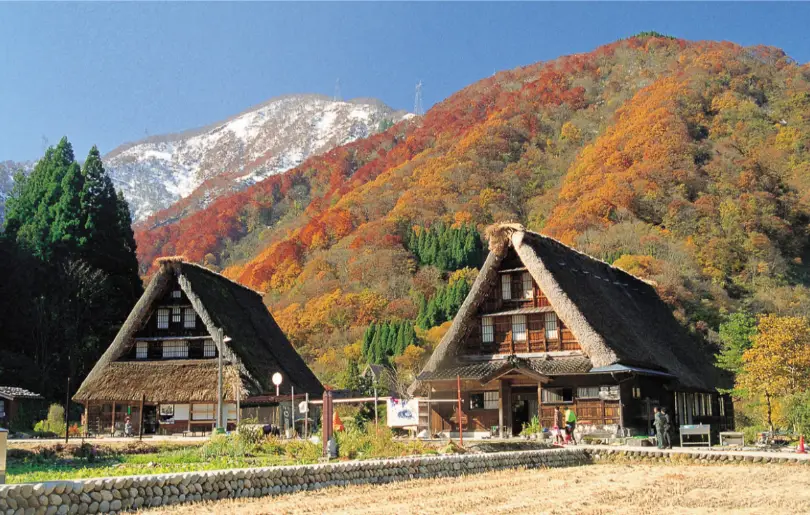
Hidden deep in the mountains of Japan’s Toyama Prefecture, Gokayama feels like a world apart — a place where time flows at its own gentle rhythm.
Often called the “quiet twin of Shirakawa-go,” this valley of thatched-roof villages offers the same World Heritage charm, but with fewer crowds, more silence, and a profound sense of authenticity.
The name Gokayama literally means “Five Valleys,” referring to the five small mountain basins carved by the clear Shō River. Within these valleys lie the two most celebrated villages — Ainokura and Suganuma — both registered alongside Shirakawa-go as UNESCO World Heritage Sites in 1995.
What distinguishes Gokayama is not grandeur, but stillness. The roads are narrow, the houses fewer, and the air seems to carry stories instead of noise. Mist often hangs above the cedar forests, bells echo softly from local shrines, and smoke rises from hearths as it has for centuries.
Visitors who journey here find not only picturesque views but also the living rhythm of a mountain community. The same families who maintain these homes also perform folk music, weave paper, and welcome guests into their inns. It’s heritage lived quietly — not displayed, but shared.
If Shirakawa-go is the stage, Gokayama is the echo — quieter, deeper, and profoundly human.
2. History & World Heritage Significance
The story of Gokayama stretches back more than 400 years.
During Japan’s feudal era, this remote valley formed part of the Etchū Province, governed under the Kaga domain. Its steep terrain, heavy snowfall, and isolation shaped a distinct way of life — one where self-reliance and cooperation were not virtues but necessities.
The people of Gokayama built their homes in the gassho-zukuri style: massive wooden farmhouses with steeply pitched thatched roofs resembling hands in prayer (gassho).
These structures, like those in Shirakawa-go, were designed to endure the harsh winters that bury the region under meters of snow. The wide attics were used for silk cultivation, an essential source of income for mountain families.
But while the architectural form is shared, the social structure of Gokayama was unique. The valley’s remoteness fostered strong communal bonds through the yui system — villagers helping one another with roof repairs, farming, and festivals. Even today, that cooperative spirit remains visible in the upkeep of the villages and their cultural traditions.
In the late 20th century, as Japan modernized, many of these homes faced destruction or abandonment. Roads, dams, and depopulation threatened to erase centuries of history. Local residents, however, resisted. With extraordinary determination, they launched preservation initiatives, maintaining traditional lifestyles while opening their homes to the world.
In 1995, UNESCO recognized Gokayama (Ainokura and Suganuma Villages) together with Shirakawa-go for their “outstanding example of a traditional human settlement adapted to its environment.”
What UNESCO honored was not only the houses themselves but also the living culture — the songs, crafts, and community systems that continue to sustain them.
Today, Gokayama remains a model of sustainable heritage preservation: a balance between tourism and tradition, economy and ecology, modern life and timeless values.
3. Ainokura Village – The Living Heritage
Among the two main villages of Gokayama, Ainokura is the larger and more inhabited one — home to about twenty gassho-zukuri houses nestled against a backdrop of mountains that seem to embrace the valley like a cradle.
Unlike many open-air museums, Ainokura is a real community. Families still live here, tend their gardens, and carry out the same daily rituals as their ancestors. Smoke rises from chimneys in winter; rice dries on wooden racks in autumn; frogs sing in the paddies come summer. Visitors are guests, not spectators.
The layout of the village follows the contours of the land, with narrow paths connecting houses, shrines, and small rice terraces. Each roof, rethatched every few decades, is slightly different — some sharper, some wider — reflecting individual craftsmanship within a shared form.
Inside several homes, you can enter small folk museums and workshops. The Ainokura Folklore Museum displays tools, clothing, and documents that show how the villagers balanced farming, sericulture, and trade. Other houses offer hands-on experiences such as paper-making (washi) and weaving hemp cloth, traditional skills still passed down through the generations.
Many houses also serve as minshuku — family-run inns where travelers can stay overnight. Guests sleep on futons under wooden beams, eat home-cooked mountain food by the hearth, and wake to the sound of river water and roosters. It’s one of the most intimate cultural experiences in Japan — living heritage in its truest sense.
In the evening, when day-trippers have left and the lights of the houses glow softly through the mist, Ainokura becomes dreamlike. The quiet is absolute; the air feels timeless. It’s no exaggeration to say that spending a night here is like stepping into the past — except that it still breathes.
4. Suganuma Village – Harmony of Preservation and Display
A short drive downstream along the Shō River lies Suganuma, smaller than Ainokura but equally rich in history and atmosphere.
While Ainokura thrives as a living community, Suganuma functions as both a residential hamlet and an open-air museum, showcasing the balance between everyday life and preservation.
The village consists of about nine thatched farmhouses surrounded by fields, gardens, and forest. Here, visitors can easily explore both authentic homes and exhibition buildings that explain the cultural practices of the region.
One of the highlights is the Gokayama Folk Museum, which introduces the daily life of the villagers through displays of tools, crafts, and silk-production equipment. Nearby, the Saltpeter Museum tells the fascinating story of Gokayama’s historical role in gunpowder production — a craft that required precision, secrecy, and cooperation.
During the Edo period, this trade brought stability and modest prosperity to the otherwise isolated mountain communities.
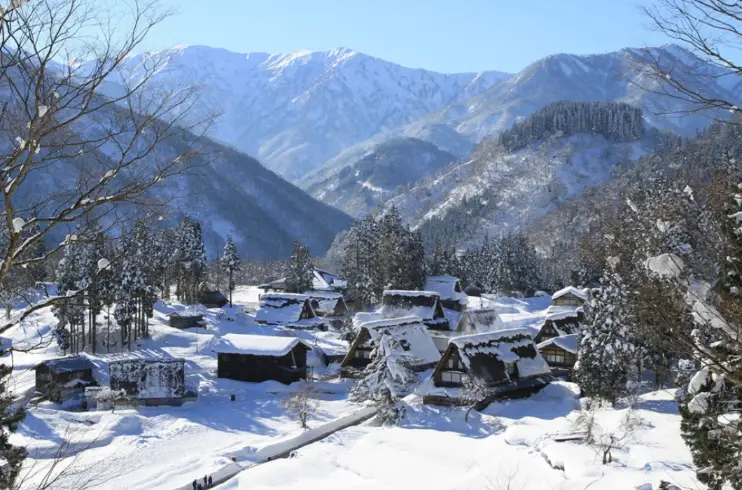
Suganuma’s setting itself feels cinematic — the Shō River curves below, crossed by a graceful suspension bridge, and mist often drifts through the valley at dawn. In winter, snow blankets the roofs so deeply that only the triangular peaks remain visible, creating one of Japan’s most iconic countryside scenes.
Visitors often say that Suganuma represents the perfect balance between authenticity and accessibility: it offers the educational context of a museum without losing the warmth of a lived-in place.
Walk slowly, listen to the river, and you’ll sense why UNESCO called these villages “harmonious examples of human adaptation to the natural environment.”
Here, harmony isn’t a concept — it’s visible, audible, tangible.
5. Traditional Crafts & Folk Music
If architecture is the body of Gokayama, then craft and music are its soul.
The valley’s isolation not only preserved its houses but also nurtured a distinct cultural identity — one expressed through handmade art and hauntingly beautiful sound.
Gokayama Washi (Handmade Paper)
Among its most famous traditions is Gokayama washi, a style of handmade paper produced using mulberry fibers, clear mountain water, and natural plant starch.
For centuries, villagers made washi in winter, when the air was cold and clean enough to ensure the paper’s strength and purity. The process remains entirely manual — pounding the fibers, filtering them through wooden screens, and drying each sheet by hand.
Visitors can join short workshops in both Ainokura and nearby Kaminashi, where artisans guide you through the steps of papermaking. The soft texture and durability of Gokayama washi make it prized for calligraphy, lanterns, and even modern interior design.
Gunpowder and Saltpeter Craftsmanship
Another lesser-known but historically crucial craft of Gokayama was saltpeter production, used in gunpowder.
During the Edo period, the region secretly supplied this material to feudal lords, using a complex fermentation process involving soil, ash, and organic waste. The industry was dangerous and required strict secrecy — yet it sustained many families through harsh winters.
Today, the Saltpeter Museum in Suganuma explains this surprising chapter of mountain ingenuity, reminding visitors that necessity often breeds innovation.
Gokayama Folk Music – Kokiriko & Mugiya-bushi
But perhaps the most enchanting expression of Gokayama’s culture is its folk music.
The valley is the birthplace of the “Kokiriko-bushi”, considered the oldest surviving folk song in Japan. Its hypnotic rhythm and elegant choreography — performed with wooden percussion sticks called sasara — date back over a thousand years.
Locals still perform Kokiriko and other traditional songs such as Mugiya-bushi and Etchū Owara-bushi at festivals, inns, and cultural events. Watching the slow, graceful dance in a dimly lit farmhouse, accompanied by shamisen and flute, feels less like a performance and more like a ceremony — a dialogue between past and present.
These traditions endure not for tourists but for continuity. As one villager once said, “If we stop singing, the mountains will fall silent.”
And in Gokayama, silence is not emptiness — it’s listening.
6. Access & Scenic Drive
Getting to Gokayama is part of the adventure. The journey itself — through winding valleys, tunnels, and riversides — is one of Japan’s most beautiful rural drives.
From Kanazawa
From Kanazawa, Gokayama is about 90 minutes by car, accessible via the Hokuriku Expressway and Takaoka–Tonami–Nanto route.
Many travelers combine it with a day trip to Shirakawa-go, forming a scenic loop that showcases both World Heritage sites in one journey.
From Shirakawa-go
From Shirakawa-go, Gokayama lies just 30–40 minutes south, connected by the National Route 156, which follows the Shō River through steep mountain valleys.
It’s a breathtaking drive — cliffs on one side, water on the other, dotted with small hamlets, shrines, and cedar groves.
Along the way, look for roadside viewpoints where you can stop to see waterfalls and terraced fields that feel untouched by time.
By Bus or Tour
Public buses connect Gokayama with Shirakawa-go, Takaoka, and Johana, but service is limited.
For flexibility, a private car tour or charter is highly recommended, especially if you want to explore both Ainokura and Suganuma at your own pace.
Some drivers also include hidden spots like Taira Village or the Gokayama roadside michi-no-eki, where local snacks and crafts are sold.
White Road Scenic Extension
In warmer months (June–November), consider extending your trip via the Hakusan Shirakawa-go White Road — a spectacular mountain drive connecting Gokayama and Shirakawa-go with Hakusan and Kanazawa.
The route offers waterfalls, alpine forests, and panoramic viewpoints. Combined with Gokayama, it creates one of central Japan’s most scenic cultural loops.
Best Seasons to Visit
Spring: Cherry blossoms and new rice fields bring gentle color to the valley.
Summer: Lush greenery and folk dance festivals.
Autumn: Brilliant foliage — the golden light in Ainokura is unforgettable.
Winter: Deep snow and serenity; villages glow softly in the cold air.
Driving in winter is possible but requires snow tires. For many visitors, however, the effort is worth it — seeing Gokayama under snow feels like entering a silent fairytale.
(See also → Access from Kanazawa / Hakusan–Shirakawa-go White Road)
7. Traveler Tips & Stay Options
A visit to Gokayama is best experienced slowly — ideally overnight, when the buses leave, and the valley returns to its natural rhythm.
Staying Overnight
Several minshuku (family-run inns) in Ainokura and Suganuma welcome guests year-round.
Rooms are simple but warm, with futons, paper screens, and the soft crackle of the hearth (irori). Meals feature local mountain cuisine — salt-grilled river fish, wild vegetables (sansai), tofu dishes, and doburoku sake, a rich unfiltered rice wine unique to this region.
Hosts often share stories of their families, the challenges of maintaining thatched roofs, and the festivals that mark the seasons. Some may even invite guests to join a Kokiriko performance or teach a few steps of the dance.
Staying in a farmhouse here is not about luxury but connection — with people, with history, and with silence itself.
Local Etiquette
Walk quietly through the villages at night; voices and lights carry easily in the still air.
Do not enter private homes unless invited; many houses are still family residences.
Photography is welcome, but always ask before photographing people.
Support local crafts by buying handmade paper, textiles, or folk art — small purchases directly help preservation.
Nearby Attractions
Johana Town: Known as the “little Kyoto of Etchū,” featuring a historic temple street and craft shops.
Taira Folk Museum: Displays regional tools and offers context about the greater Gokayama valley.
Gokayama Washi Studio: In Kaminashi, offering hands-on papermaking workshops year-round.
Viewpoints: The road between Ainokura and Suganuma has several observation decks perfect for photography.
Whether you visit for a few hours or a night, you’ll find that Gokayama rewards curiosity and patience. It’s a place best explored not with a checklist, but with open senses — the sound of a stream, the scent of wood smoke, the taste of home-cooked miso soup.
(See also → Tips & Manners / Staying Overnight)
8. In Summary
The Gokayama World Heritage Villages — Ainokura and Suganuma — may be smaller and quieter than Shirakawa-go, but their spirit feels even deeper.
Here, tradition is not preserved behind ropes or glass; it is lived daily, in laughter, in labor, in song.
To walk through these villages is to witness a dialogue between human persistence and nature’s rhythm — a harmony refined over centuries of snow, silence, and survival. The people of Gokayama didn’t just build houses to withstand winter; they built a culture of cooperation strong enough to endure time itself.
For travelers, Gokayama offers a rare gift: the feeling of being far from the modern world without being lost. It is the kind of place that asks nothing from you but attention — to listen, to breathe, to feel the quiet heartbeat of Japan’s mountain soul.
When you leave, you might look back one last time and see smoke rising gently into the valley sky.
That smoke isn’t just firewood burning; it’s memory — of hands that built, voices that sang, and lives that continue still.
Gokayama is not a remnant of the past. It is the present, preserved by love.
© 2024 Kanazawa Experience. Affiliate Links