Kanazawa Experience
Deai Bridge – The First Step Into Shirakawa-go
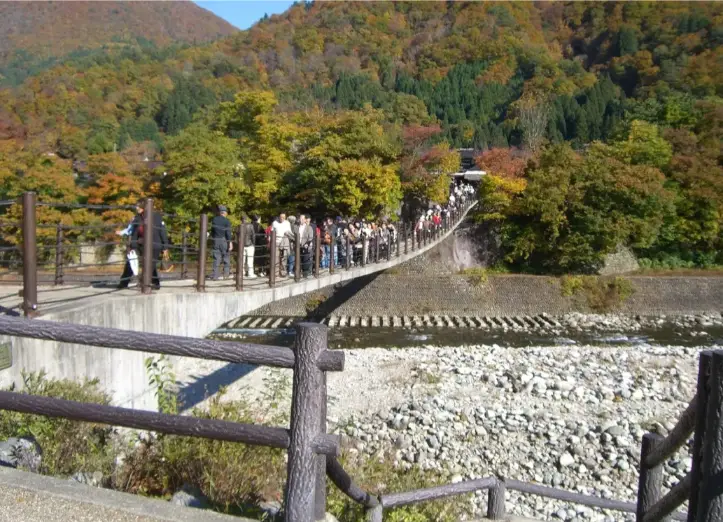
1. About the Deai Bridge
Before visitors see their first thatched roof, before they enter the narrow lanes of Ogimachi Village, there is a moment of transition — a threshold between the modern world and one of Japan’s most iconic landscapes.
That threshold is the Deai Bridge, a long pedestrian suspension bridge stretching across the wide, powerful Shō River.
For countless travelers, crossing this bridge is the true beginning of their Shirakawa-go experience.
The noise of the parking areas fades, replaced by the sound of flowing water and the low hum of wind moving through the valley. As you step onto the bridge, the scenery opens: mountains rise dramatically on both sides, the river glimmers below, and the first hints of the village appear ahead — rooftops peeking above trees, a faint line of smoke drifting from a hearth.
The name “Deai” means encounter or meeting.
It reflects not only the meeting of land and river, or of traveler and village, but also the quiet meeting of past and present. This bridge connects the everyday world with the timeless rhythms of mountain life.
Though often described as simply a crossing point, the Deai Bridge is far more. It is an emotional entrance, a cinematic sequence that prepares the senses for the calm and beauty of Shirakawa-go. Whether you arrive in sunshine, fog, or falling snow, the bridge creates a memorable first impression that lingers long after the visit is over.
2. History & Design
The Deai Bridge was constructed to provide a safe, stable pedestrian route into Ogimachi Village, especially after Shirakawa-go became increasingly popular with domestic and international visitors.
Before the bridge existed, crossing the river required either long detours or unstable paths, making access difficult during heavy snow or strong currents.
Suspension Design
The bridge is a suspension-style pedestrian bridge, supported by strong steel cables anchored into the riverbanks. This design allows it to:
absorb movement
remain flexible during wind
support high foot traffic
stay safe during winter snows
Though it gently sways as people walk across, this movement is intentional. It distributes weight and allows the structure to adjust naturally to river winds and seasonal changes.
Length & Structure
Stretching approximately 100 meters, the bridge is long enough to offer a panoramic view yet short enough for easy crossing.
The walkway is flat and wide, accommodating two-way foot traffic even during peak travel hours.
Safety Measures
Because Shirakawa-go experiences extreme winter conditions, the bridge includes:
anti-slip surfaces
seasonal snow clearing
reinforced handrails
periodic structural checks
The region’s high snowfall and strong winds were central considerations in the bridge’s design. The result is a structure that maintains safety and stability year-round.
A Gateway Created for Travelers
Importantly, the bridge was not built as a tourist attraction — it was developed as infrastructure for safe access. Yet, over time, it evolved into one of the most photographed and beloved parts of the Shirakawa-go journey.
For many, the Deai Bridge represents the moment when modern Japan recedes and the quiet heart of the mountains begins.
3. Scenic Value & Photogenic Points
The Deai Bridge is one of the most picturesque pedestrian bridges in Japan, thanks to its unobstructed views of river, mountains, and village. Whether you’re holding a camera or simply taking mental snapshots, every step reveals a new composition.
The Shō River Below
Looking down, the water often shines in shades of turquoise, emerald, or deep steel-blue depending on season and weather. Snowmelt in spring transforms the river into a bright, energetic ribbon, while autumn adds warm reflections from the trees.
The height of the bridge creates a striking perspective — close enough to see the movement of the water, high enough to appreciate its scale.
Mountains Framing the Valley
The surrounding mountains rise nearly vertically from the riverbanks, creating a natural frame for photographs.
In summer, they appear dense and powerful; in winter, the slopes are coated in a thick layer of snow that glows blue in the morning light.
First Glimpse of Ogimachi
Toward the end of the bridge, visitors can spot:
the peaks of gassho roofs
village smoke rising from irori hearths
narrow walking paths lined with trees
seasonal decorations or banners
This “approach shot” is one of the most atmospheric pre-views of Shirakawa-go.
Best Lighting
Morning: Soft light on the river, gentle shadows on the mountains
Late afternoon: Warm golden glow ideal for portraits
Winter mornings: Ethereal mist rising from the river
Rainy days: Deep green mountains and dramatic low clouds
Photogenic Angles
From the center looking north toward the village
From the entrance side with the full bridge in frame
From the riverbank (short side path) capturing the bridge and mountains
Because the bridge slightly sways, photographers often enjoy experimenting with:
slow shutter river shots
symmetrical center-frame perspectives
wide-angle images capturing the full valley
The Deai Bridge is a place where nature and culture meet in one panoramic sweep — creating some of the most memorable images of a Shirakawa-go visit.
4. Cultural Experience: “The First Step Into the Village”
Crossing the Deai Bridge is not merely a physical act — it is a sensory and emotional experience that sets the tone for the entire visit.
A Transition Between Worlds
As visitors step off the bus or exit their vehicles, they’re still in the modern world: paved roads, parking structures, signs, and tour groups.
But the moment you step onto the bridge, the atmosphere shifts.
You feel:
the slight sway under your feet
the clean mountain air
the cool breeze from the river
the change in light as the valley opens
It is a symbolic gateway, announcing that the next steps lead into a place with centuries of living history.
The Soundscape
The sound environment alone creates the feeling of entering another world:
the deep, steady flow of the Shō River
wind moving through pine branches
faint temple bells during certain seasons
footsteps echoing along the bridge deck
These sounds guide visitors into a slower, more mindful rhythm.
Cultural Significance
Locals often say that the bridge represents:
a meeting (people arriving from different places)
a threshold (between everyday life and tradition)
a welcome (the village extending an open invitation)
For many travelers, the moment they step onto the bridge becomes the beginning of a lasting memory — the emotional “opening scene” of their Shirakawa-go journey.
A Place of Arrival
Travelers frequently pause midway:
to look around
to take a quiet breath
to appreciate the scale of the mountains
to feel the history waiting on the other side
Even if you’ve seen countless photos of Shirakawa-go online, nothing compares to this moment of arrival — the meeting of expectation and reality.
5. Seasonal Landscapes
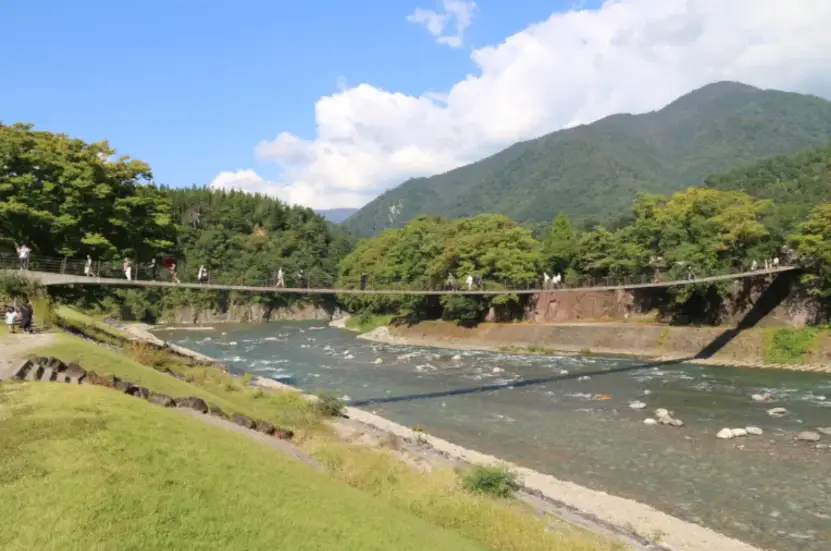
The Deai Bridge offers one of the most dynamic seasonal landscapes in Shirakawa-go. Because it crosses a wide, open river valley, the scenery shifts dramatically throughout the year — sometimes hour by hour. Each season creates its own atmosphere, revealing a different side of the village’s natural beauty.
Spring – Fresh Water and Blossoms
In early spring, the mountains are still dusted with lingering snow while the river swells with meltwater. The Shō River glows a pale turquoise, running fuller and faster than at any other time of year.
Cherry blossoms near the entrance of the bridge begin to bloom in April, creating soft pink accents against the deep greens of the valley. The combination of crisp air, new leaves, and bright water makes spring one of the most refreshing times to cross the bridge.
Summer – Lush Green and Deep Shade
Summer surrounds the bridge in dense, vibrant foliage. Pines and broadleaf trees reach their fullest green, and the valley feels alive with movement — leaves trembling in the breeze, sunlight flickering on the river surface, and dragonflies darting along the walkway.
On hot days, the cool air rising from the Shō River offers relief. Visitors often pause to enjoy the shade from the bridge’s cables and admire the powerful contrast between emerald mountains and bright river water.
Autumn – A Valley Painted in Gold and Red
Autumn is perhaps the most dramatic season for scenery. The mountains transform into layers of red, gold, and orange, creating a panoramic view that frames the bridge like an oil painting.
The river reflects these colors in rippled patterns, especially on calm afternoons. Photographers love this season for its warm light and clean air, which sharpen every detail of the surrounding landscape.
Crossing the Deai Bridge in autumn feels like stepping through a natural tunnel of color into the historic village beyond.
Winter – Snow, Silence, and Blue Light
Winter is when the Deai Bridge becomes truly magical.
Snow blankets the valley, softening every sound and turning the riverbanks into sculpted white forms. The river continues to flow beneath the snow, creating ribbons of steel-blue water.
Cold air moves across the bridge, and the wooden walkway may crunch under your boots. Despite the chill, many visitors consider winter the most enchanting season — the contrast between the snow-covered village ahead and the solitary river crossing behind creates a sense of calm that is unforgettable.
On some mornings, mist rises from the river and catches the sunlight, giving the entire valley a quiet, ethereal glow.
6. Access & Practical Information
The Deai Bridge is easy to find and central to most itineraries, especially for travelers arriving by bus or private car.
Location
The bridge is located just a few minutes’ walk from:
the Shirakawa-go Bus Terminal
the official village parking area
the entrance to Ogimachi Village
It spans the Shō River at a point where the valley widens, making both the village and the surrounding mountains clearly visible.
How to Reach the Bridge
From the Bus Terminal:
Walk toward the river on the marked footpath (approx. 3 minutes). Signs guide visitors directly to the bridge.
From the Parking Area:
After parking at the main lot, visitors follow a short pedestrian route to the bridge entrance.
For Tour Buses:
Guides often gather their groups at the base of the bridge before crossing, as it provides an excellent orientation point.
Crossing Time
Most visitors take 3–5 minutes to walk across.
However, many linger halfway to:
take photos
watch the river
enjoy the breeze
wait for their group
During peak hours, crossing may take a bit longer but remains smooth and well organized.
Winter Safety
Winter can bring snow, ice, and strong winds. Still, the bridge is carefully maintained and remains open under normal conditions.
Tips for winter visitors:
walk slowly, especially early in the morning
use the handrails when needed
avoid stopping in large groups if wind is strong
wear proper footwear with traction
Seasonal crews clear snow and apply anti-slip materials to keep the walkway safe.
Accessibility
The bridge is accessible for:
strollers
wheelchairs
elderly travelers
However, snowy conditions may require additional caution.
Facilities Nearby
At the base of the bridge on the village side, visitors will find:
small shops
snack stands
rest areas
maps and signboards
The bridge connects directly to the main pedestrian route leading toward the heart of Ogimachi.
7. Traveler Tips & Etiquette
Although the Deai Bridge is simple in structure, thoughtful behavior helps ensure a safe and pleasant experience for everyone.
Photography Tips
Avoid standing in the exact middle of the walkway for too long; it blocks traffic.
If you want to take symmetrical shots, move slightly to the side.
Early morning provides the clearest and most cinematic light.
On windy days, keep your camera strap secure — the valley wind can be surprisingly strong.
Walking Etiquette
Walk on the right side to allow smooth two-way traffic.
Do not shake the bridge intentionally — it can disturb others.
Keep group conversations soft, as sound carries across the valley.
Be mindful of people behind you who may want to pass.
Safety Advice
In winter, use footwear with good traction.
In summer, bring water — the valley can become warm in the afternoon.
Children should hold onto guardians’ hands during windy conditions.
Best Times to Cross
Before 10 AM for quiet scenery and soft shadows
Around sunset for warm colors and glowing ridgelines
During snowfall for a magical, cinematic experience
Midday can become crowded, but the flow is generally smooth and well managed.
Connecting Your Visit
After crossing the Deai Bridge, visitors can easily access:
Wada House
Kanda House
Myōzenji Temple
Gasshozukuri Folk Museum
village restaurants and shops
The bridge naturally becomes the “starting line” for exploring the historic district.
8. In Summary
The Deai Bridge is more than a path across a river — it is a beautifully staged introduction to the world of Shirakawa-go.
Here, travelers experience the shift from modern landscapes to timeless mountain traditions.
The sound of the river, the sight of the mountains rising steeply on both sides, and the anticipation of stepping into the village together create a moment that remains long after the visit.
The bridge represents:
a threshold from one world to another
a meeting place between travelers and heritage
a symbolic beginning to the Shirakawa-go journey
Whether crossed in sunshine, mist, or softly falling snow, the Deai Bridge invites visitors into a slower rhythm — one shaped by nature, tradition, and the quiet dignity of the mountains.
It is, in every sense, the first chapter of Shirakawa-go.
© 2024 Kanazawa Experience. Affiliate Links