The Rise of Kanazawa

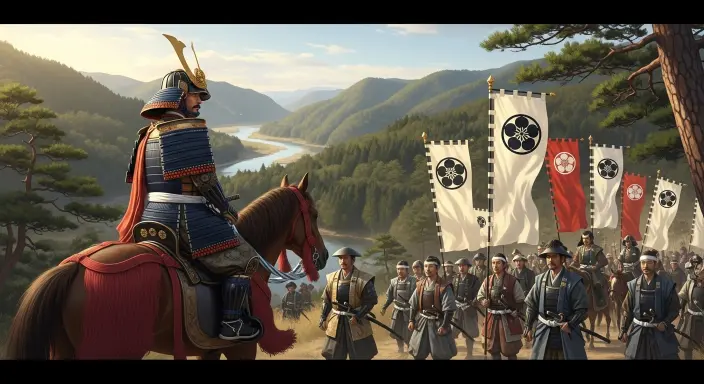
Maeda Toshiie on horseback leading samurai troops with banners in the mountains near Kanazawa

Illustrated reconstruction of Maeda Toshiie and his retainers laid the foundation of Kanazawa’s prosperity during Japan’s feudal wars.

Maeda Toshiie and the Making of a Castle Town (late 16th–early 17th century)
In the late 1500s, Maeda Toshiie chose Kanazawa as the seat of the powerful Kaga Domain and began building Kanazawa Castle. Around its white walls and massive stone bases, a carefully planned castle town took shape—samurai quarters, merchant streets, canals, and temples arranged for both defense and daily life. Rather than seek glory through war, the Maeda family nurtured culture, learning, and craftsmanship, setting the tone for the elegant city visitors enjoy today.

Choosing the Site – Strategy and Water

Samurai surveying rice fields and rivers under the Maeda clan’s land development project

Illustrated image of The Maeda clan’s irrigation and farming projects turned Kanazawa into one of Japan’s richest domains.

Toshiie selected a low hill between rivers, easy to defend and rich in water. Moats and canals were laid out to supply the castle and gardens, and to power mills and daily life in the growing town.

Building Kanazawa Castle

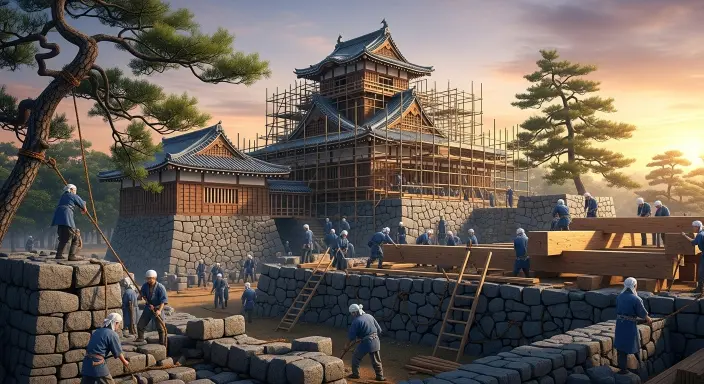
Workers constructing Kanazawa Castle with wooden scaffolding and stone walls during Japan’s feudal era

Illustrated image of The construction of Kanazawa Castle marked the beginning of the city’s development as the capital of the Kaga Domain.

Stone masons raised imposing ramparts; carpenters set elegant towers with white plaster and black tile. Gates and baileys controlled movement while keeping a graceful appearance that came to symbolize Kanazawa.

Designing the Castle Town

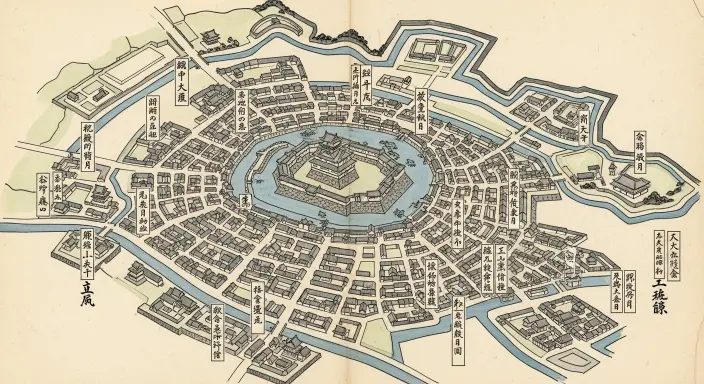
Historical illustrated map of Kanazawa Castle and surrounding moats and streets

Illustrated image of an old map showing the concentric layout of Kanazawa Castle and its surrounding town.

Districts were organized with purpose: samurai residences near the castle, merchant streets for markets and craft shops, and temple belts that doubled as firebreaks and defensive lines. Streets, bridges, and waterways created smooth flows of people and goods.

The Garden Vision Takes Root

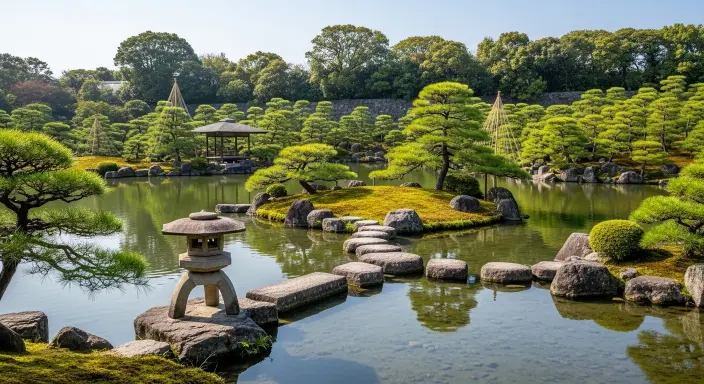
Scenic view of Kenrokuen Garden with stepping stones, lanterns, and pine trees

Illustrated image of Kenrokuen Garden, created by the Maeda family, embodies the beauty and harmony of Edo-period landscape design.

What later became Kenrokuen began as the castle’s outer garden and water system. Ponds, streams, and stonework were designed to frame views of the castle while creating a serene setting for tea and poetry.

Culture over Arms – The Maeda Policy

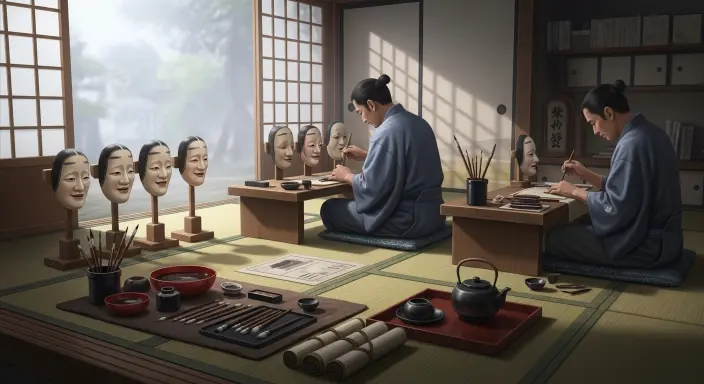
Kanazawa artisans crafting Noh masks in a traditional tatami room

Illustrated image depicting Kanazawa’s samurai culture nurtured refined arts such as Noh theater and tea ceremony.

The Maeda lords invested their wealth in education, Noh theater, tea ceremony, and artisan guilds. This “culture first” spirit turned the new castle town into a center of refinement rather than a battlefield.

Crafts and Markets Flourish

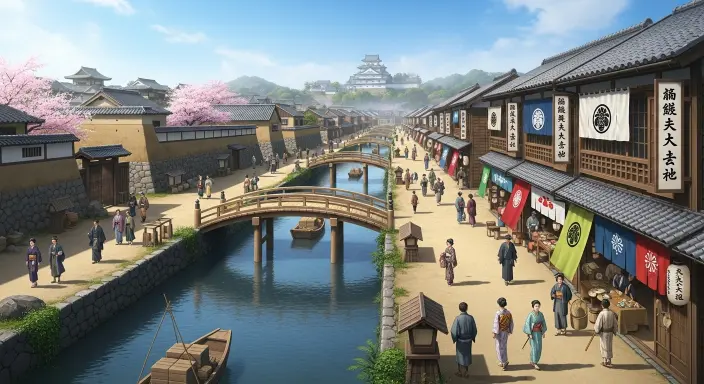
Lively Edo-period castle town street in Kanazawa with bridges, shops, and townspeople

Illustrated image depicting during the Edo period, Kanazawa thrived as a vibrant castle town filled with merchants and artisans.

Workshops and markets multiplied—metalwork, lacquer, silk, and the gold-leaf craft that would become a Kanazawa hallmark. Merchants thrived under stable governance, feeding prosperity across the domain.

Living with Water – Bridges, Moats, and Fire Safety

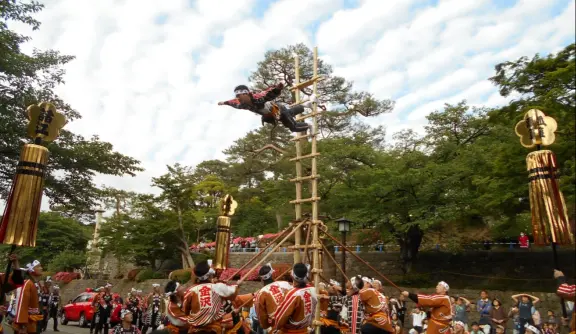
Kaga-tobi firefighters performing traditional ladder stunts at Kanazawa Castle park

Image source: [Kanazawa Fire Bridge]

Waterways were lifelines for transport and fire prevention. Curved bridges and stone embankments gave the town both security and beauty—practical engineering with timeless aesthetics.

From fortress to flourishing city: Maeda Toshiie’s vision shaped Kanazawa into a cultured castle town.

© 2024 Kanazawa Experience. Affiliate Links

Scroll to Top