3. The Real Power Isn’t Punishment — It’s Social Design
This is where many visitors misunderstand Japan.
People don’t avoid littering because: “I’m afraid of the law.”
They avoid it because: “It’s awkward, visible, and inconvenient.”
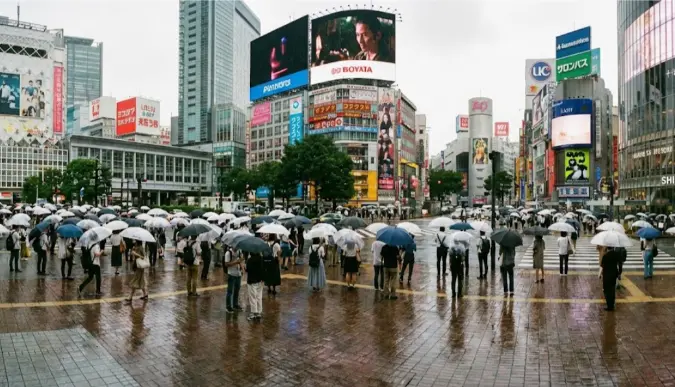
Japan’s cities are designed to make littering uncomfortable.
Why are there no trash cans?
It wasn’t always this way.
After the 1995 sarin gas attack on the Tokyo subway, many public trash cans were removed for security reasons. Later, as recycling rules became stricter and maintenance costs increased, those bins simply never returned.
Over time, this absence reshaped daily behavior.
-
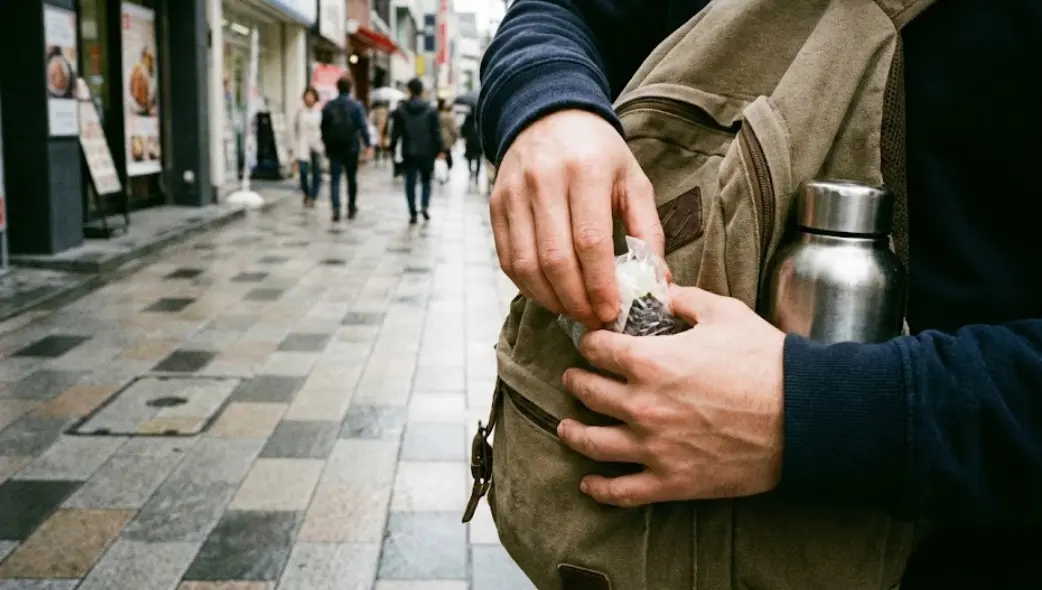
Few trash cans → Carrying trash became normal
-
Strict sorting → Careless disposal stands out
-
Clean streets → One piece of trash looks abnormal
Punishment still exists, but it’s the last safety net.
Everyday behavior is guided instead by:
-
Discomfort
-
Visibility
-
Social friction
4. Japan Is Neither a “Moral Paradise” Nor a “Fear State”
You often hear two extreme explanations:
-
“Japanese people have high morals.”
-
“Japan has extremely strict laws.”
Both are only half true.
The reality looks like this:
-
National law sets the broad framework
-
Local ordinances control behavior in real spaces
-
Social norms apply constant, quiet pressure
It’s not magic.
It’s not fear.
It’s not blind morality.
It’s design.
What This Means for Visitors
If you’re visiting Japan, you’re stepping into a system where
cleanliness is easier than breaking the flow.
A few practical tips:
-
Carry a small bag (a reusable or plastic bag) for your own trash
-
Use convenience stores: If you buy food or drinks there, you can usually dispose of the packaging
-
Take it home: Expect to carry garbage back to your hotel
You’re not being tested as a “good person.”
You’re simply participating in a system that works.
And once you understand that,
Japan’s clean streets stop feeling mysterious —
and start feeling intentionally designed.