Kanazawa Experience
Hakusan–Shirakawa-go White Road: Japan’s Hidden Scenic Drive Connecting Mountains and Heritage Villages
1. Introduction: The Hidden Scenic Drive Connecting Mountains and Heritage
Tucked away in central Japan, the Hakusan–Shirakawa-go White Road is one of the country’s most breathtaking mountain drives—yet still remains a hidden gem for many international travelers. Stretching through the heart of the Hakusan National Park, this 33-kilometer toll road links Ishikawa Prefecture and Gifu Prefecture, connecting the traditional city of Kanazawa with the UNESCO-listed village of Shirakawa-go and the charming old town of Takayama.
Unlike Japan’s high-speed expressways, the White Road invites you to slow down and experience the rhythm of nature—lush forests, cascading waterfalls, alpine peaks, and sweeping valley views unfold around every curve. During autumn, the entire mountain range blazes with vibrant shades of red and gold, drawing photographers and explorers alike.
For travelers seeking an off-the-beaten-path experience, the Hakusan–Shirakawa-go White Road offers a perfect mix of natural beauty, cultural heritage, and quiet adventure—an unforgettable journey through one of Japan’s most scenic mountain regions.
2. What Is the Hakusan–Shirakawa-go White Road?
The Hakusan–Shirakawa-go White Road (formerly known as the “Hakusan Super Rindo”) is a mountain toll road that winds for about 33 kilometers between Hakusan City (Ishikawa) and Shirakawa Village (Gifu). Open only from early June to late November, the road is closed in winter due to heavy snowfall, which can reach several meters in this region.
The route climbs to an elevation of nearly 1,450 meters, offering panoramic views of the Hakusan mountain range, one of Japan’s “Three Sacred Mountains” alongside Mount Fuji and Mount Tateyama. Along the way, you’ll find waterfalls, viewpoints, and even a natural outdoor hot spring that visitors can enjoy while surrounded by forest mist.
Because public transportation does not cover this area, driving is the only way to explore the White Road. This exclusivity adds to its charm—travelers can enjoy peaceful scenery away from crowds while stopping freely at photo spots or short hiking trails along the route.
3. Top Scenic Spots Along the Route
Driving the Hakusan–Shirakawa-go White Road is not just about getting from point A to point B — it’s about enjoying each curve, each overlook, and each sound of mountain streams echoing through the forest. Here are some of the must-see scenic spots along the way:
Kunimi Observatory (国見展望台)
This panoramic viewpoint offers a sweeping view over deep valleys and the distant peaks of Mount Hakusan. On clear days, you can see the contrast between the lush green mountains of Ishikawa and the rugged ridges of Gifu. It’s one of the best spots to capture the grand scale of the Japanese Alps.
Fukube-no-Otaki Waterfall (福部の大滝)
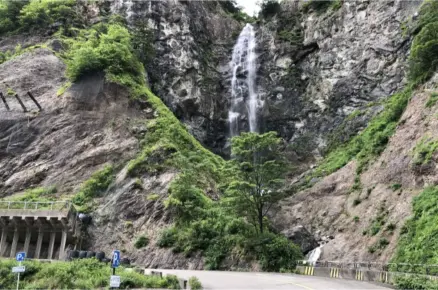
One of the highlights of the route, this 86-meter waterfall roars down into a misty gorge. A short walkway leads to an observation deck where you can feel the cool spray and take powerful photos. In autumn, the waterfall is beautifully framed by fiery red maple leaves.
Oyadani-no-Yu (親谷の湯)
A natural open-air hot spring nestled beside a mountain stream. Though officially closed for bathing in recent years, it remains a fascinating spot to visit — steam rises from the ground, and the rustic wooden path feels like stepping into a hidden onsen village in the wild.
Shirayama Observatory (白山展望台)
Located near the highest point of the road, this observation area provides a majestic view of Mount Hakusan, one of Japan’s three sacred mountains. In the early morning, clouds often drift below the peaks, creating a mystical “sea of clouds” view that photographers love.
Each of these spots has parking nearby, allowing travelers to stop safely, stretch, and enjoy the fresh mountain air. Even a half-day drive along the White Road can feel like a full immersion in Japan’s alpine nature.
4. Best Time to Visit
The Hakusan–Shirakawa-go White Road is open only from early June to late November, as heavy snow closes the mountain pass for the rest of the year. However, each season offers a different charm:
Early Summer (June – July):
The snow still lingers on the mountaintops, while the forests are lush and vibrant. Waterfalls carry abundant meltwater, and the air is crisp and cool — a refreshing escape from Japan’s humid cities.
Late Summer (August – September):
Wildflowers bloom along the roadside, and mountain streams shimmer under the summer sun. It’s the perfect time for a leisurely drive with windows down and the sound of cicadas echoing through the valleys.
Autumn (October – Early November):
This is the absolute best season. The entire mountain range transforms into a brilliant tapestry of red, orange, and gold. The foliage typically peaks in mid-October, and the contrast between colored leaves, white waterfalls, and blue skies creates one of the most photogenic scenes in Japan.
Because of its limited opening period, visiting the White Road feels special — a seasonal experience that marks the rhythm of mountain life. Always check the latest road conditions before you go, as temporary closures can occur due to weather.
5. How to Get There & Driving Tips
The Hakusan–Shirakawa-go White Road sits between Kanazawa in Ishikawa Prefecture and Shirakawa-go in Gifu Prefecture, forming part of the scenic route toward Takayama. Because there is no public transportation across this mountain area, renting a car is the only practical way to experience it.
From Kanazawa:
Take the Hokuriku Expressway to the Hakusan-Ichirino Exit, then follow the signs toward the White Road entrance at Bettou-deai Gate. The drive from Kanazawa City to the gate takes about one hour.
From Shirakawa-go:
From the village, head south along Route 360 to reach the Togei-deai Gate in about 20–25 minutes. The White Road itself connects these two gates through the mountains.
Driving tips:
The total distance is about 33 km, and it takes 60–90 minutes depending on how often you stop for photos.
Toll fee: roughly ¥1,700 for cars (one way), payable at the entrance gate.
Road width: narrow in some sections, with occasional one-lane curves. Drive slowly and give way to uphill traffic.
Weather: sudden fog or rain showers are common, especially in summer afternoons. Always check forecasts before departure.
Facilities: there are parking areas, restrooms, and viewpoints along the route, but no gas stations once you enter—fill up beforehand.
Driving this route is comfortable for those used to mountain roads, and perfectly manageable for cautious drivers who take their time. The reward is a peaceful, crowd-free drive through one of Japan’s most pristine alpine landscapes.
6. Recommended One-Day Model Course
A full day is ideal to explore the White Road and its surrounding highlights. The following itinerary works well for travelers starting in Kanazawa and ending in Takayama, visiting Shirakawa-go along the way.
Morning – Depart Kanazawa (8:30 a.m.)
Pick up a rental car and drive toward the Bettou-deai Gate. Enjoy a scenic ascent into the mountains. Stop at Kunimi Observatory for the first panorama, then continue to Fukube-no-Otaki Waterfall, where you can stretch your legs and take photos.
Late Morning – Oyadani-no-Yu Area (around 11:00 a.m.)
Pause at this natural hot spring site and enjoy the view of the valley. Even without bathing, the steam and river sound create a tranquil atmosphere.
Noon – Mountain Picnic or Rest Stop
There are small rest areas and benches near the midpoint of the route. Bring snacks or a light lunch; there are no restaurants along the road itself.
Afternoon – Drive Toward Shirakawa-go (arrive 1:30–2:00 p.m.)
Descend through the Togei-deai Gate and reach the UNESCO World Heritage village of Shirakawa-go. Spend about 1.5–2 hours exploring the thatched-roof houses, observatory deck, and souvenir streets.
Evening – Head to Takayama (arrive around 5:00 p.m.)
Continue southeast on Route 156 for about 60 minutes to Takayama, known for its Edo-period merchant streets and evening charm.
This one-day route combines mountain nature, cultural heritage, and relaxing rural scenery—an unforgettable journey linking Kanazawa, Shirakawa-go, and Takayama in a single loop through central Japan.
7. Nearby Attractions & Cultural Spots
The White Road is more than just a scenic drive—it’s also a gateway to several of central Japan’s most fascinating cultural destinations. If you have time, extend your trip to include these nearby highlights:
Shirayama Hime Shrine (白山比咩神社, Hakusan City)
Located near the Ishikawa entrance of the White Road, this ancient shrine is dedicated to the mountain goddess of Hakusan. With over 2,000 years of history, it serves as the spiritual heart of the region. The long cedar-lined approach and peaceful atmosphere make it an ideal stop before or after your drive.
Shiramine Village (白峰)
A quiet mountain community famous for its traditional thatched-roof houses, handmade soba noodles, and natural hot springs. Shiramine offers a glimpse into old rural life and is less crowded than Shirakawa-go, yet equally charming. Many travelers enjoy a stay at a local ryokan here before heading into the mountains.
Shirakawa-go (白川郷)
A UNESCO World Heritage Site and one of Japan’s most iconic villages. The gassho-style farmhouses, with their steep thatched roofs, are designed to withstand heavy snow. Climb up to the Ogimachi Observatory for a panoramic view of the village—especially magical in autumn or after rain.
Takayama Old Town (高山古い町並み)
An hour’s drive from Shirakawa-go, Takayama is known for its beautifully preserved Edo-period streets, morning markets, and local sake breweries. It’s a perfect overnight stop after driving the White Road, combining mountain scenery with cultural depth.
These destinations together create a beautiful narrative: from Hakusan’s sacred mountains, through alpine landscapes, to the timeless villages of Gifu. Each stop adds context and cultural richness to your White Road adventure.
8. Travel Tips & Useful Information
Before you set off on your journey, here are some practical points to make your trip safe and smooth:
Opening Period:
Usually early June to late November, depending on snowfall. Always confirm the latest opening dates on the official website before departure.
Toll Fee:
Approx. ¥1,700 one way (car), payable at either entrance gate (Bettou-deai or Togei-deai). Motorbikes and larger vehicles have different rates.
Operating Hours:
Generally 7:00 a.m. – 6:00 p.m. in summer and 8:00 a.m. – 5:00 p.m. in autumn. The final entry time is usually one hour before closing.
Facilities:
Rest areas, toilets, and several parking spots are available along the route. However, there are no restaurants, convenience stores, or gas stations once you enter, so prepare in advance.
Weather & Safety:
The mountain climate changes quickly. Bring a light jacket even in summer, and avoid driving during heavy rain or fog. Wild animals (like monkeys or deer) occasionally appear—drive cautiously.
Navigation Tip:
In your GPS or Google Maps, search for “Hakusan Shirakawago White Road” or “白山白川郷ホワイトロード” to find the official route. Both entrances—Bettou-deai (Ishikawa side) and Togei-deai (Gifu side)—are clearly marked.
© 2024 Kanazawa Experience. Affiliate Links