Kanazawa Experience
Tips & Manners in Noto: Traveling with Respect in Japan’s Sacred Coastal Region

1. Introduction: Traveling with Awareness and Respect
The Noto Peninsula is not just a destination — it is a living community of farmers, fishermen, and craftsmen who share deep respect for nature and tradition.
To travel here is to be part of a quiet rhythm, where kindness and humility matter more than speed or convenience.
The people of Noto are warm but reserved.
They welcome visitors who approach with open hearts and gentle manners — travelers who see not just sights, but connections.
When you walk softly, greet sincerely, and listen to the voices of the land, you’ll discover something deeper than tourism:
the peaceful dialogue between guest and host, human and nature.
2. Understanding Local Life in Noto
Noto’s charm lies in its simplicity — small fishing towns, rice terraces, and family-run inns that thrive on everyday harmony.
Because of this, travelers are encouraged to move with sensitivity to local life.
🏘 Respect the Pace of Rural Communities
Life here follows the rhythm of the seasons and the sea. Shops may close early, buses may come infrequently, and that’s part of the charm.
Don’t rush — instead, let the slower pace remind you that rest is part of travel.
🚶 Be Mindful When Exploring Villages
Greet locals with a smile or a gentle “Konnichiwa.” Even a few kind words create connection.
Avoid entering private paths, shrines, or farmland without invitation.
When photographing people or homes, always ask first — many elders are shy but friendly when approached kindly.
🕊 Travel Quietly
In Noto, silence is sacred. Whether walking through a fishing port at dawn or visiting a temple, move softly and listen — the quiet is part of the beauty.
3. Respecting Nature and Sacred Spaces
The landscape of Noto — its mountains, rice terraces, and sea cliffs — is not just scenery. It is a living shrine where humans and nature coexist in gratitude.
🌾 In the Satoyama Fields
Stay on marked trails and avoid stepping into rice terraces or private gardens.
Farmers often wave or bow from afar — return the gesture; it means respect.
🌊 By the Sea
Do not litter or pick shells or stones from sacred beaches like those near Suzu.
Waves can change suddenly — respect the sea as locals do, as both giver and guardian.
⛩ At Shrines and Temples
Bow lightly before entering, and avoid loud conversation or phone use.
When taking photos, look for signs; some areas are meant for prayer, not photography.
Donations (saisen) of small coins (¥5 or ¥10) are a gesture of gratitude, not obligation.
Remember: the spiritual heart of Noto lies in mutual respect — every act of care honors the harmony that locals have preserved for generations.
4. Dining Etiquette and Food Culture
Sharing a meal in Noto is a precious experience — it is not only about taste, but about connection and gratitude.
🍱 At Local Restaurants and Ryokans
Wait to be seated and say “Itadakimasu” before eating — it means “I humbly receive.”
Avoid wasting food, especially rice or fish. Farmers and fishermen see every grain and catch as sacred.
At the end, say “Gochisousama deshita” to thank your host — it is a moment of shared warmth.
🍶 Drinking Together
If you are offered sake, allow your host to pour for you — and pour back for them.
This exchange, called “oshaku,” symbolizes friendship and equality.
🍵 Home-Style Meals and Farmstays
When staying at a farmhouse, the meal may be simple — grilled vegetables, miso soup, local pickles — but it carries deep meaning.
Complimenting the freshness and care behind the food is one of the greatest ways to show appreciation.
Eating in Noto is not about indulgence; it’s about harmony.
The true flavor comes not only from the sea and soil — but from the heart that offers it.
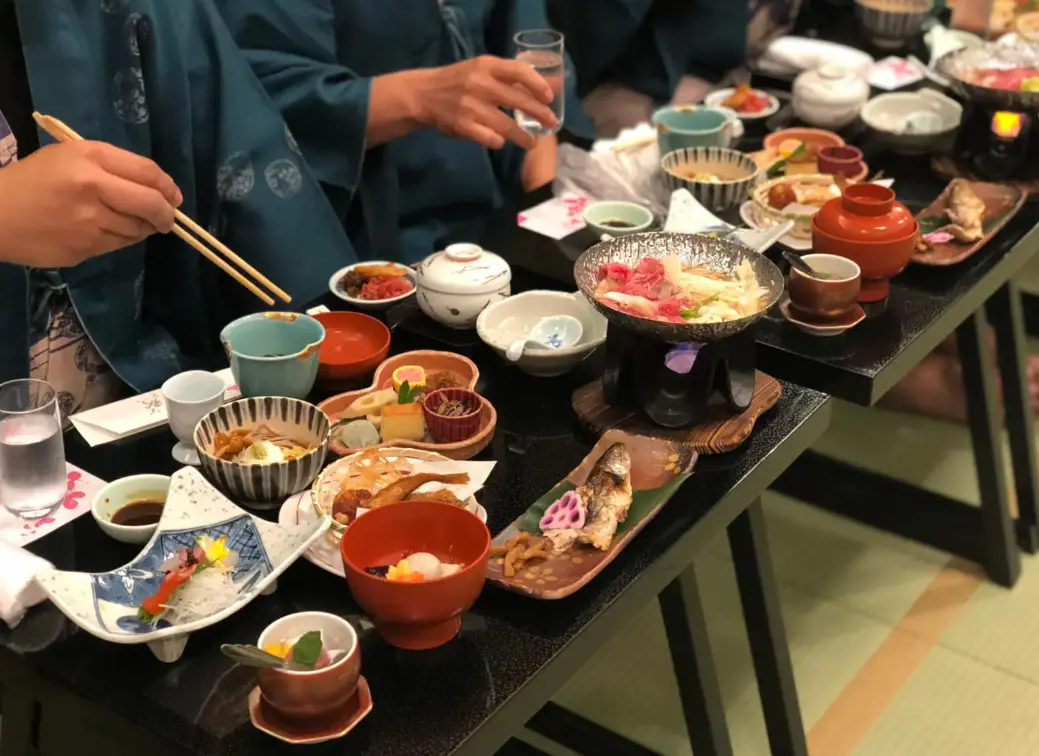
5. Hot Springs and Accommodation Etiquette
Noto’s ryokans and hot springs are not just places to rest — they are extensions of the region’s culture of care.
Here, good manners create comfort for everyone and allow travelers to share in a centuries-old tradition.
♨ Before Entering the Bath
Always wash and rinse thoroughly at the shower area before entering the onsen.
Towels should not be dipped into the shared water — leave them on your head or by the side.
Tattoos are increasingly accepted, but if unsure, check with the staff discreetly; most ryokans are welcoming to foreign visitors.
🏮 In Your Room or Ryokan
Take off your shoes before entering the tatami area.
When wearing a yukata robe, fold the left side over the right (the opposite is for funerals).
Keep voices soft, especially in hallways or public spaces — quietness is part of the relaxation.
🍱 At Dinner and Breakfast
Meals are usually served at set times; punctuality shows respect for your hosts.
Thank your attendant with a smile or a soft “Arigatou gozaimasu.”
In Noto, the true luxury is consideration — being aware of others and the harmony of the space you share.
6. Communication and Cultural Sensitivity
Even if you don’t speak Japanese, kindness travels farther than words.
In Noto’s smaller towns, many residents may not speak English fluently, but they communicate with sincerity and warmth.
🗣 Helpful Phrases
Konnichiwa (Hello / Good afternoon)
Arigatou gozaimasu (Thank you very much)
Sumimasen (Excuse me / I’m sorry)
Oishii desu (It’s delicious)
Simple phrases, spoken kindly, carry deep meaning.
💬 Respectful Interaction
Bow lightly when greeting or thanking — it shows respect and humility.
Avoid loud voices or abrupt gestures, which may startle locals.
When unsure, observe how others behave — imitation here is a quiet form of respect.
Noto teaches travelers that communication is not about fluency — it’s about presence and sincerity.
A gentle smile often says more than perfect grammar.
7. Supporting Local Recovery and Sustainability
After the 2024 earthquake, parts of Noto continue to rebuild.
Travelers can play an important role in this recovery — not through charity, but through meaningful connection.
💚 Ways to Support
Stay at local inns and guesthouses rather than large chains.
Purchase handmade crafts or local food products directly from artisans.
Share photos and stories of your experience — positive visibility helps the region heal.
🌱 Sustainable Travel Practices
Bring reusable bottles and bags; waste management is limited in rural areas.
Respect natural areas by taking nothing but photos and leaving nothing behind.
Support restaurants and markets that use local ingredients.
Every yen spent in Noto is more than an economic act — it’s a gesture of solidarity, a way to say:
“We see you, and we care.”
8. The Spirit of Travel in Noto
In Noto, travel is not about escape — it is about returning.
Returning to quiet, to nature, to what it means to live gently among others.
As you walk its coastal roads or watch the sun set over the rice terraces, you realize that the most respectful travelers are those who listen — to the wind, the people, and the silence itself.
Here, gratitude is expressed not with words, but with awareness.
To bow slightly before a shrine, to whisper thanks before a meal, to tread lightly on an ancient path — these small gestures connect you to something timeless.
Noto does not ask for perfection.
It asks for presence — and in return, it offers peace.
🌸 In Essence
To travel respectfully in Noto is to understand that every moment — a shared smile, a quiet meal, a sunset reflected on the sea — is part of a sacred exchange.
In this land of simplicity and spirit, you are not just a visitor.
You become part of the circle of care that keeps Noto alive.
Travel slowly. Travel kindly. Leave only gratitude.
© 2024 Kanazawa Experience. Affiliate Links