Kanazawa’s Golden Age – The Samurai City of Culture

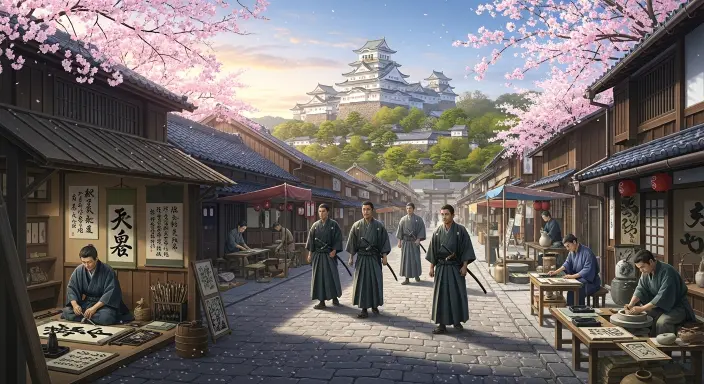
Illustrated Edo-period Kanazawa castle town with samurai, calligraphers, and artisans under cherry blossoms, symbolizing harmony between culture and craftsmanship.

Illustrated view of Edo-period Kanazawa — a city where samurai, artists, and merchants lived side by side.

The Samurai City of Culture – Kanazawa under the Maeda Clan (17th–19th centuries)

Unlike many domains that sought military glory, the Maeda lords of Kaga chose a different path. To show loyalty and avoid conflict with the Tokugawa shogunate, they invested their vast wealth not in armies, but in education, craftsmanship, and the arts. This wise decision nurtured a rich cultural heritage — from traditional crafts like gold leaf and Kutani porcelain to tea ceremony, Noh theater, and garden design — which still defines Kanazawa today.

From Power to Peace

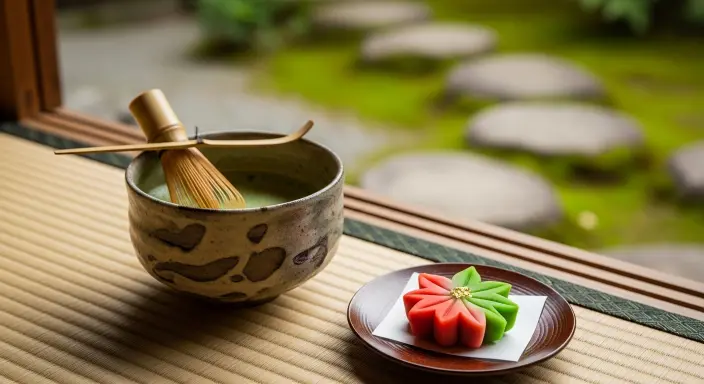
Close-up of a tea bowl and gold leaf wagashi in a Kanazawa tea room overlooking a samurai-style garden, representing harmony and refined beauty.

A tranquil tea ceremony scene in Kanazawa, where gold leaf sweets and garden design reflect refined beauty.

From the 1600s to the 1800s, Kanazawa flourished as the castle town of the Kaga Domain, ruled by the powerful Maeda Clan.
The Maedas were Japan’s second-wealthiest samurai family, but instead of using their wealth for wars, they invested in education, art, and culture.
Thanks to that peaceful vision, Kanazawa grew into Japan’s fourth-largest city, after Edo (Tokyo), Osaka, and Kyoto.

The Spirit of Culture – Art, Learning, and Elegance

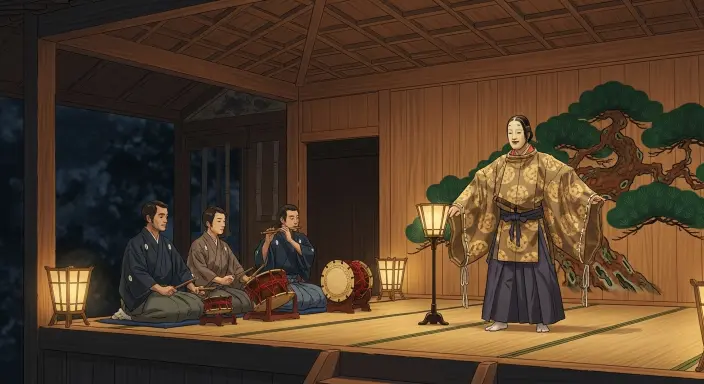
Traditional Noh performance on a Kanazawa stage with masked actor and musicians, expressing the elegance and spiritual depth of Japan’s performing arts.

Illustrated view of  a Noh performance, where stillness and rhythm express timeless grace.

The Maeda lords supported tea ceremony, Noh theater, gold leaf crafts, and calligraphy.
They even sent scholars to Kyoto and Edo to learn the latest knowledge.
As a result, Kanazawa became known as a city of refined beauty — a place where samurai and artists lived side by side.

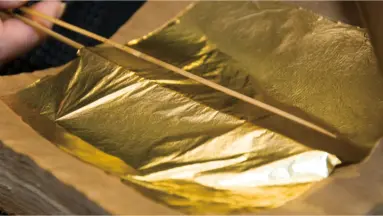
A craftsman delicately handling a thin sheet of gold leaf in Kanazawa, Japan — the city famous for its traditional gold leaf art.

A Kanazawa craftsman applies gold leaf by hand — a shining symbol of the city’s artistry and devotion to perfection.

In Kanazawa, gold isn’t just a material — it’s a living art.
Each whisper-thin sheet you see here is one ten-thousandth of a millimeter thick — lighter than a breath, yet strong enough to shine for centuries.
Watching a craftsman at work is mesmerizing: the gentle rhythm of the hammer, the shimmer of gold dancing in the air.
It’s not just a process — it’s a moment where light itself is being shaped by human hands.

Kanazawa produces over 99% of Japan’s gold leaf. Even today, visitors can try applying gold leaf on chopsticks, boxes, or even soft-serve ice cream!

Everyday Life in the Samurai City

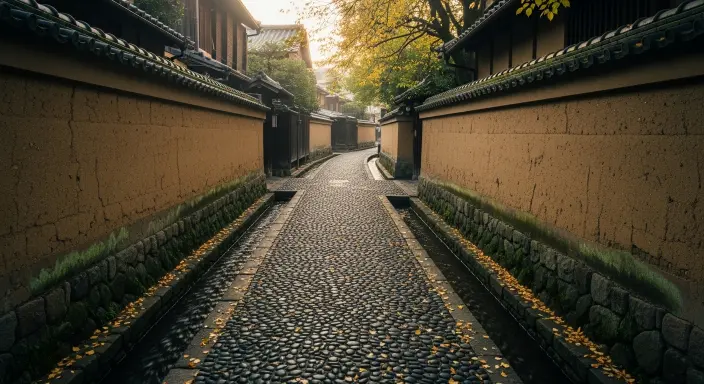
Stone-paved alley in Kanazawa’s Nagamachi Samurai District with earthen walls and small water canals, softly lit by morning light, evoking calmness and timeless beauty.

Nagamachi’s stone lanes and earthen walls still whisper the calm pride of the samurai age.

Walking through Kanazawa’s samurai districts today, like Nagamachi, you can still sense the quiet dignity of those days.
Stone-paved lanes, earthen walls, and water channels remain just as they were centuries ago.
It’s a living museum of samurai culture.

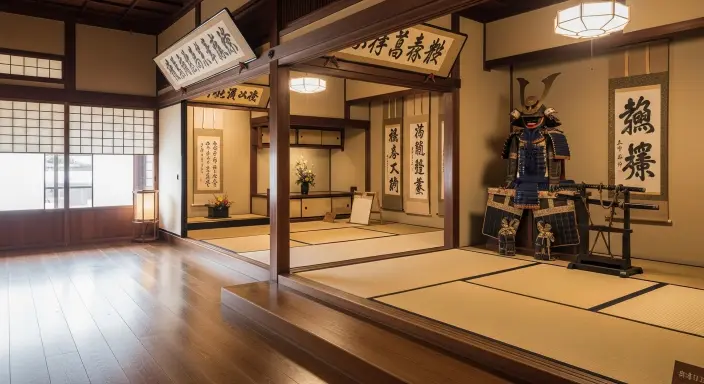
Interior of a samurai residence in Kanazawa with tatami rooms, armor, and calligraphy scrolls, reflecting the discipline and elegance of samurai life.

Conceptual image of Inside a Kanazawa samurai residence — where strength met refinement and simplicity became beauty.

Step inside a samurai residence in Kanazawa, and you’ll feel a world where discipline met elegance.
Tatami floors, calligraphy scrolls, and samurai armor were not just decorations — they reflected the spirit of balance between strength and culture.
Imagine sitting here centuries ago, listening to the sound of water outside, while warriors practiced the art of calm and self-mastery.

Everyday Life in the Samurai City

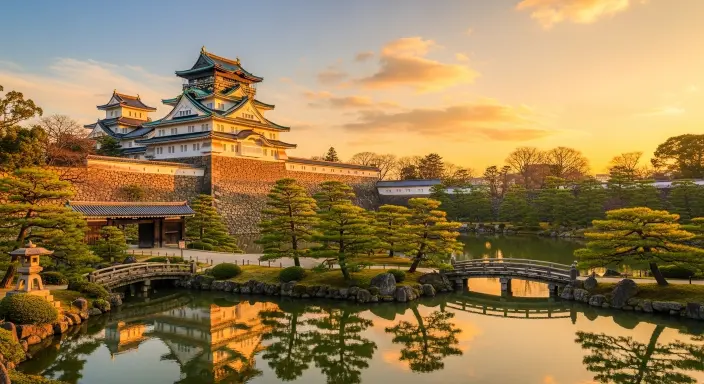
Kanazawa Castle and Kenrokuen Garden at sunset, golden light reflecting in the pond, symbolizing harmony between samurai power and cultural beauty.

Conceptual image of Kanazawa Castle and Kenrokuen Garden glowing in the golden light of sunset — where samurai history meets timeless beauty.

Located in the heart of Kanazawa, Kanazawa Castle and Kenrokuen Garden together form one of Japan’s most beautiful and historically rich landscapes. Once the seat of the powerful Maeda clan, rulers of the Kaga Domain during the Edo period, Kanazawa Castle symbolized prosperity achieved through culture and learning rather than war.
Today, visitors can walk through Nagamachi’s quiet samurai lanes — where you can still hear the sound of water channels once used by the samurai households.

© 2024 Kanazawa Experience. Affiliate Links

Scroll to Top